
The Story
What They Thought Then
Cash Box - July 9, 1966
"A powerful rock outing"
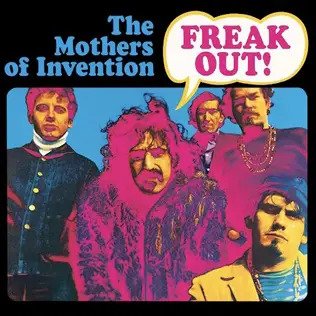
The trade magazine's album review highlighted the group's unusual instrumentation, colorful packaging, liner notes, and singled out 'Hungry Freaks, Daddy', 'Who Are the Brain Police?', and 'Motherly Love'.
Washington Evening Star - 1966
Ronnie Oberman
"some of the wildest rock-and-roll ever."
Oberman's report followed the group's Washington promotional visit and described 'Freak Out!' as a controversial double album selling for the price of one.
Los Angeles Herald-Examiner - July 24, 1966
Bob Levinson
"Those who obtain the album may do it by discarding the records and playing the cover."
Levinson's piece mixed an interview with Zappa and hostile commentary on the album, which he noted had already been called vulgar, ridiculous, and a dangerous influence.
Los Angeles Times - August 7, 1966
Pete Johnson
"the greatest stimulus to the aspirin industry since the income tax."
Johnson acknowledged potent satire and praised 'Go Cry on Somebody Else's Shoulder' as a successful parody, but argued the album often dissolved into pointless abstraction.
Los Angeles Times - October 4, 1966
Charles Champlin
"that rare thing, a distinctive group sound."
Reviewing the Mothers at the Whisky a Go-Go, Champlin praised Zappa's shifts in rhythm and dynamics, continuous forms, percussion choices, and the group's overall invention.
Disc and Music Echo - November 19, 1966
"at worst, a meaningless row."
The British review appeared before the album's UK release, calling its strange sounds worth hearing while criticizing the singing, songs, and musicianship.
Los Angeles Times WEST magazine - November 27, 1966
Tom Nolan
"helping, in their surrealistic fashion, to create a New Music"
Nolan's long feature placed 'Freak Out!' among underground best sellers and described its mixture of satire, orchestration, electronic noise, and social provocation.
The Village Voice - December 1, 1966
Richard Goldstein
"the most poorly produced package since the Hindenburg Zeppelin"
Goldstein made the criticism while praising the Mothers' first New York appearance, urging readers not to let the album's production obscure the group's originality.