

The Story
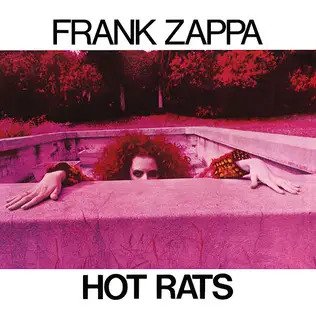
Released in October 1969, Hot Rats marked a major shift in Frank Zappa’s work, moving away from the collage-heavy satire of the Mothers of Invention toward extended instrumental composition. Credited to Frank Zappa rather than the Mothers, the album focused primarily on jazz-influenced improvisation, structured instrumental writing, and studio experimentation. It was recorded in 1969 in Los Angeles and became one of Zappa’s first projects built around multitrack recording and extensive overdubbing, allowing him to layer instruments and refine performances in ways that differed from his earlier ensemble-based recordings.
The opening track, Peaches en Regalia, immediately established the album’s new direction. Built from tightly arranged melodic sections, it combines rock rhythm with jazz phrasing and orchestral-style layering. The piece introduces the album’s emphasis on composition-driven instrumentals rather than satire or spoken collage. In contrast, Willie the Pimp features one of the few vocal appearances on the album, with Captain Beefheart delivering blues-based vocals before the track expands into a long instrumental jam. The performance moves from structured song form into extended improvisation, reflecting the album’s balance between composition and spontaneous playing.
Several pieces draw on earlier Zappa material while reimagining it in a jazz-rock setting. Son of Mr. Green Genes develops themes related to the earlier Mr. Green Genes, transforming them into an extended instrumental built around shifting grooves and solos. Little Umbrellas offers a more restrained arrangement with layered instrumentation and a lighter tonal palette. These contrasts contribute to the album’s dynamic pacing, alternating between dense improvisation and tightly controlled composition.
The Gumbo Variations is one of the album’s longest tracks and highlights the collaborative improvisation at the center of Hot Rats. The piece features extended solo passages and interplay among musicians, emphasizing texture and development over conventional structure. The closing track, It Must Be a Camel, returns to a composed approach with complex melodic writing and unusual harmonic movement, bringing the album back to a carefully arranged conclusion.
Hot Rats also became notable for its production approach. Zappa made extensive use of overdubs and editing, assembling performances from multiple takes and layering instrumental parts. This method allowed him to treat the studio as a compositional environment while still preserving the spontaneity of improvisation. The result was a polished yet exploratory sound that helped define jazz-rock fusion at the end of the 1960s.
By focusing on instrumental writing, extended improvisation, and multitrack production, Hot Rats represented a turning point in Zappa’s catalog. It reduced the overt satire of earlier albums and highlighted his abilities as a composer and arranger. The album’s blend of structured themes and open-ended jams made it one of his most accessible yet musically ambitious releases, and it remains a central example of his late-1960s transition toward jazz-influenced instrumental work.