

The Story
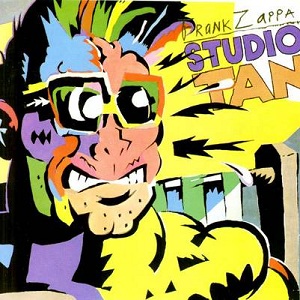
Released in September 1978, Studio Tan emerged during Frank Zappa's contract dispute with Warner Bros., and like several albums from that period it was issued without his approval of the final presentation. Even under those circumstances, the music is unmistakably his: long-form composition, abrupt stylistic contrast, satire, and intricate ensemble writing drawn from sessions across the mid-1970s. The original vinyl sequence is especially important because the side-two order was later altered on CD reissues.
The album's first side is occupied entirely by Greggery Peccary, a sprawling narrative work that combines spoken voices, recurring motifs, orchestral writing, jazz-rock movement, and social satire. Zappa uses the piece to build an absurd corporate fable full of sudden transitions and character shifts, but the structure is tighter than its chaos first suggests. Themes return in altered forms, and the whole side works as a self-contained suite rather than a collection of disconnected episodes.
Side two of the original LP changes the scale without abandoning that compositional mindset. Let Me Take You to the Beach offers a brief, deliberately lightweight contrast, almost like a fake-pop postcard placed beside the denser material. Revised Music for Guitar & Low-Budget Orchestra then re-expands the frame through ensemble writing and carefully shaped instrumental development, while REDUNZL closes the album with one of Zappa's sharpest instrumental statements of the era, built on rhythmic precision and rapid interplay.
That original order gives Studio Tan a clearer dramatic balance than the later resequenced CD presentation. Instead of moving from the long narrative directly into instrumentals and ending with a novelty-style vocal piece, the 1978 LP lets the lighter song open side two before the more elaborate instrumental material takes over. The result is a more deliberate arc and a stronger sense of contrast, making Studio Tan feel less like an archival leftovers collection and more like a concise example of Zappa's mid-1970s compositional range.