
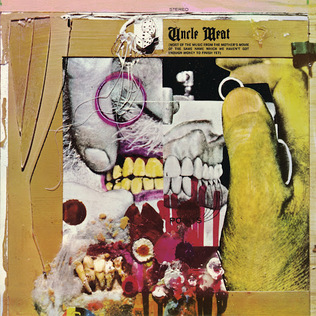
Uncle Meat
By Frank Zappa
The Story
Released in April 1969, Uncle Meat was a double album by Frank Zappa and the Mothers of Invention that expanded his collage-based approach into one of his most ambitious studio projects of the 1960s. The album combined instrumental compositions, spoken dialogue, live recordings, and studio experimentation into a loosely connected sequence that reflected Zappa’s growing interest in editing and assembly as compositional tools. Much of the material was recorded in 1967 and 1968, with additional overdubs and edits shaping the final structure.
Uncle Meat was originally conceived as part of a broader multimedia project connected to a film of the same name, and this cinematic idea influenced the album’s fragmented flow. Short dialogue segments, abrupt transitions, and recurring musical themes create the feeling of moving through scenes rather than traditional songs. The Voice of Cheese and other spoken interludes function as connective tissue, linking instrumental pieces and reinforcing the sense of a surreal narrative environment. Instead of building toward a single storyline, the album presents a series of loosely related episodes that share musical motifs and conceptual continuity.
Instrumentally, the record places strong emphasis on complex arrangements and ensemble interplay. Pieces such as Nine Types of Industrial Pollution, The Dog Breath Variations, and Uncle Meat Variations showcase tightly structured writing with shifting time signatures and layered instrumentation. Zappa relied heavily on musicians including Ian Underwood, whose multi-instrumental contributions helped shape the album’s dense sound. The writing blends rock instrumentation with jazz phrasing, orchestral textures, and sudden stylistic contrasts, reflecting Zappa’s interest in merging composition with improvisation.
Recurring themes appear throughout the album in different forms. Dog Breath, in the Year of the Plague introduces melodic material that later returns in expanded instrumental variations, while King Kong-related motifs appear through Prelude to King Kong and related passages. These repetitions help unify the album despite its fragmented presentation. Other tracks, such as Mr. Green Genes and Sleeping in a Jar, add vocal-based sections that contrast with the largely instrumental emphasis, further broadening the album’s scope.
Live recordings are also integrated into the collage, including satirical or deliberately awkward performances that blur the line between concert documentation and conceptual humor. These segments sit alongside tightly edited studio compositions, reinforcing Zappa’s approach of treating all recorded sound as compositional material. The closing sequence moves through increasingly abstract passages before ending with Cruising for Burgers, bringing the album back toward a more song-oriented structure.
Uncle Meat stands as one of Zappa’s most complex 1960s releases, combining intricate instrumental writing, studio collage, and conceptual continuity. It deepened his use of recurring motifs and demonstrated how he could construct a large-scale work from fragments recorded across different sessions. The result is a dense, cinematic album that bridges structured composition, improvisation, and experimental editing.