
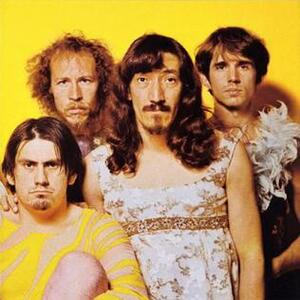
We're Only in It for the Money
By Frank Zappa
The Story
Released in March 1968, We're Only in It for the Money by Frank Zappa and the Mothers of Invention expanded the group's satirical approach into a tightly edited collage aimed at both mainstream American culture and the late-1960s counterculture. Recorded primarily in 1967 and produced by Zappa, the album was conceived as a continuous listening experience built from short segments, abrupt edits, recurring musical fragments, and spoken interludes. The sequencing and studio manipulation were central to the concept, with tracks flowing into one another to form a single satirical narrative rather than a conventional collection of songs.
The album is often discussed for its cover parody of the Beatles' Sgt. Pepper's Lonely Hearts Club Band, which reflected Zappa's broader intention to mock the commercialization of the hippie movement. Songs such as Who Needs the Peace Corps? and Flower Punk directly target the superficial adoption of countercultural imagery, portraying characters drawn to San Francisco trends without deeper conviction. Concentration Moon and Mom & Dad contrast this satire with darker commentary, addressing social tension, generational conflict, and violence. These shifts between humor and unsettling subject matter are reinforced by the fragmented structure, where brief pieces and spoken transitions interrupt expectations.
We're Only in It for the Money also demonstrates Zappa's growing reliance on studio construction. Short tracks like Telephone Conversation, Hot Poop, and Nasal Retentive Calliope Music function as connective tissue, while longer pieces such as Mother People and The Chrome Plated Megaphone of Destiny move into more abstract territory. The closing track in particular abandons conventional songwriting in favor of tape collage and experimental textures, emphasizing the album's role as a composed sound piece rather than a straightforward rock record.
Recurring motifs appear across the album, including musical callbacks and lyrical references that link separate sections. Let's Make the Water Turn Black and The Idiot Bastard Son introduce narrative fragments about suburban life and eccentric characters, contributing to the sense that the record is assembling a distorted portrait of American society. The brief reprise of What's the Ugliest Part of Your Body? reinforces this circular structure, while Take Your Clothes Off When You Dance adds another layer of ironic commentary on innocence and performance.
By combining satire of both establishment and counterculture, heavy studio editing, and rapid stylistic changes, We're Only in It for the Money pushed further than Zappa's earlier albums. It emphasized the album as a single constructed work and highlighted his interest in blending rock instrumentation with avant-garde collage. The result is a compact yet densely assembled record that critiques 1960s culture while experimenting with the possibilities of the recording studio.