
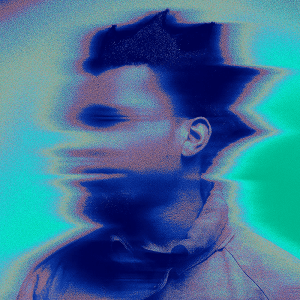
Denzel Curry
Biography
Denzel Rae Don Curry was born on February 16, 1995, in Carol City, the Miami Gardens neighborhood that would remain both a setting and a vocabulary for his music. He was drawn to words before he was known as a rapper, writing poetry in elementary school and beginning to rap in the sixth grade. At a local Boys & Girls Club he tested himself in rap battles. Lupe Fiasco, Kid Cudi and Tyler, the Creator were important early reference points, while his later discovery of artists such as Lord Infamous and Three 6 Mafia helped push him toward darker Southern rap styles. Curry also had a strong visual-art identity. He attended Miami's Design and Architecture Senior High School for two years before being expelled and transferring to Miami Carol City Senior High School. He later described that change, together with his time in art school and his involvement with Raider Klan, as formative to the artist he became.
Curry's first important musical home was Raider Klan, the underground collective built around SpaceGhostPurrp. He did not enter it through an industry connection. As Curry later recalled, he reached SpaceGhostPurrp by phone while the producer was in New York, asked if he could join, promised that he would not let him down, and then went to work on his own tape. The appeal of Raider Klan was partly aesthetic and partly practical. Its deliberately murky music drew heavily on early Memphis rap and other lo-fi Southern underground styles, but it also showed young artists without conventional studio access that they could build a musical world with cheap equipment and the internet. Curry has remembered recording with an inexpensive Walmart microphone. That do-it-yourself lesson mattered. Roughness could become part of the style rather than merely a technical limitation, and music, artwork, aliases and imagery could reinforce one another as parts of the same identity.
By 2011 and 2012 he was releasing early tapes including 'King Remembered Underground Tape 1991-1995' and 'King of the Mischievous South Vol. 1'. His voice was still developing, but several foundations were already visible: rapid rhythmic changes, Memphis-influenced cadences, visual references drawn from his wider interests, and an instinct for turning aggression into performance. Raider Klan gave Curry an audience, but he eventually separated from the collective as its internal tensions and departures increased. The transition produced 'Nostalgic 64' in 2013, an album he completed while finishing high school. 'Threatz' became one of its defining records, and its stark video strengthened the sense that Curry was constructing a visual world around the music. The album moved him beyond his Raider Klan beginnings and established him as a technically forceful rapper with ambitions that extended beyond one underground style.
The next period was complicated by grief. In February 2014 Curry's older brother Treon Johnson, known from Miami's backyard fighting scene as Tree, died after Hialeah police restrained him using physical force, pepper spray and a Taser. Curry has spoken openly about falling into depression afterward and struggling to create. Work on the 2015 double EP '32 Zel/Planet Shrooms' became part of how he kept moving. The two halves deliberately occupied different spaces. '32 Zel' remained closer to the pressure and street detail of South Florida, while 'Planet Shrooms' opened into psychedelia, funk, spacey textures and futuristic imagery. Curry connected the latter concept to his experiences with psychedelics and to the death of his friend Tiara, whose wake he attended while on mushrooms. He was also getting into George Clinton's music, while a friend introduced him to Goldie's drum-and-bass landmark 'Timeless'. The result was an early declaration that he did not intend to remain inside a single version of Southern rap.
One song from that era changed the scale of his career. Curry has said that after emerging from the depression surrounding his brother's death, he made 'Ultimate' with a renewed sense of enjoyment and released it in the early hours without first turning the moment into a conventional label or management campaign. The track's clipped Ronny J production and Curry's instantly recognizable opening became internet material in their own right. In 2016, fragments of 'Ultimate' spread through Vine edits, bottle-flip clips and other short-form videos, where the beat drop turned ordinary stunts into exaggerated victory moments. The meme could have reduced Curry to a novelty, but the timing worked differently. He was simultaneously releasing 'Imperial' and appearing in the 2016 XXL Freshman class. The viral song pulled listeners toward a catalog that was already broader than the meme suggested.
'Imperial', first issued independently in March 2016 and later re-released through a distribution arrangement with Loma Vista, was a major consolidation. The music was leaner and more direct than 'Planet Shrooms', leaving room for Curry's breath control, sudden accelerations and dense internal rhymes. Rick Ross appeared on 'Knotty Head' and Joey Bada$$ on 'Zenith', but the more important development was Curry's growing command of different levels of intensity. He could make a blunt attack record such as 'ULT' and then turn inward on 'This Life', which he identified as his favorite song on the project because it allowed him to communicate his emotions more fully. The Loma Vista deal was also important on business terms. Curry and his management had resisted earlier label interest because they did not want his career reduced to recreating 'Ultimate'. Curry later explained that Loma Vista appealed to him because the company valued his wider catalog, allowed him to retain creative control and let him keep ownership of his masters.
That determination to demonstrate his range reached a major peak on 'TA13OO' in 2018. The album was structured in three acts - 'Light', 'Gray' and 'Dark' - which were released across three consecutive days before the complete album arrived. The concept was more complicated than a simple movement from happiness into sadness. Curry described 'Light' in terms of luxury, happiness and the appearance of success, 'Gray' as the reality check when fame recedes and problems return, and 'Dark' as the point where the record becomes most destructive and unrestrained. Musically, the album shifted just as sharply, from the buoyant groove of 'Black Balloons' to the pounding force of 'SUMO' and the harsher textures of 'VENGEANCE' and 'BLACK METAL TERRORIST'. 'CLOUT COBAIN' turned the pursuit of attention and approval into a circus-like image of self-destruction, while 'SIRENS' and other songs widened Curry's focus toward social and political anxiety. The black-metal-inspired face paint used around the album was part of the same visual construction; Curry described the imagery as an art piece influenced by black metal culture.
'TA13OO' also changed how Curry wrote. After reading Gucci Mane's autobiography, he became increasingly interested in working without a notebook, freestyling ideas and then shaping the strongest material. By 2019's 'ZUU', that method had become central. Curry was living in Los Angeles and missing Miami, and instead of attempting another psychologically heavy concept album, he made a faster, more locally focused project. He has said that 'ZUU' took about two months and that virtually the entire project was freestyled, with 'Shake 88' the major written exception. The title came from a nickname for Carol City, and the record functions as a compact survey of South Florida rap memory: Miami bass, local slang, family stories and the influence of figures such as Trick Daddy, Trina, Rick Ross and Plies all run through it. The production duo FnZ, longtime Curry collaborators, helped shape much of the record. Songs such as 'RICKY' and 'SPEEDBOAT' are concise enough to function as immediate rap records while still carrying details about family rules, survival, ambition and people Curry had lost.
The same year made another part of Curry's musical identity difficult to ignore: his relationship with punk and heavy live music. His concerts had long borrowed the physical logic of hardcore shows, emphasizing pits, crowd movement and explosive transitions rather than static rap performance. In February 2019 he appeared on Australian radio station triple j's 'Like A Version' and performed Rage Against the Machine's 'Bulls on Parade' with a live band, adding his own material to the arrangement. The performance became one of the year's most widely viewed entries in the series. Later that year he recorded Bad Brains' 'I Against I' with Bad Brains for a Spotify Singles session and performed a new version of 'CLOUT COBAIN' with Fucked Up. Those collaborations clarified something that had already been visible in his shows: Curry understood punk, hardcore and rap as compatible forms of physical release rather than separate musical territories.
His 2020 collaboration with producer Kenny Beats, 'UNLOCKED', showed a different virtue: looseness. After Curry appeared on Kenny's studio series 'The Cave', the pair recorded the eight-track project in roughly three days. The beats and raps were created rapidly, and much of Curry's performance was built through freestyle-based writing. The resulting sound evoked the crooked sample logic, compressed drums and eccentric personalities associated with artists such as MF DOOM, Madlib and Ol' Dirty Bastard without simply copying a previous era. Kenny's production was chopped, distorted and cartoonish; Curry rapped in short bursts, changing voices and cadences as if each track were a different panel in a comic. They promoted the record with a fake online conflict that led into a 24-minute animated film in which the pair traveled through computer worlds to recover supposedly leaked music. The presentation fit the album itself: brief, playful and deliberately multimedia.
The forced slowdown of the pandemic pushed Curry toward a more searching project. 'Melt My Eyez See Your Future', released in 2022, grew out of therapy, martial arts training, film study and a deliberate widening of his musical palette. Curry had taken up Muay Thai and spent years studying the movement and visual language of filmmakers including Akira Kurosawa, Wes Anderson and Quentin Tarantino, while also drawing inspiration from the Western tradition that connected Kurosawa's films to directors such as Sergio Leone. Musically, he became deeply interested in the Soulquarians and the live, communal feel associated with records by the Roots, D'Angelo and Erykah Badu. He worked on parts of the album at Electric Lady Studios in New York, a place closely connected to that history, and spoke about combining a live musical sensibility with the bass weight of Southern rap. Collaborators including Robert Glasper and Thundercat helped him reach that space, while the record moved through jazz, neo-soul, boom-bap, drum and bass and heavier rap without reducing those influences to separate genre exercises.
The deeper change on 'Melt My Eyez' was lyrical. Curry described therapy as forcing him to confront himself repeatedly, and the album's writing reflects that process. Instead of hiding every admission behind an alter ego or an attack, he wrote more directly about his flaws, guilt, anxiety and attempts at personal change. The speed and force associated with his earlier work were still available, but they were no longer the automatic center of every performance. The extended edition later made the album's live ambitions literal. Curry and the ten-piece Cold Blooded Soul Band recorded ten songs in one-take performances, with the expanded release also introducing 'Chrome Hearts' and 'Larger Than Life'. It extended a thread already visible in his punk covers and jazz collaborations: Curry was increasingly comfortable treating himself as a vocalist working inside an ensemble rather than simply as a rapper performing over a finished beat.
After that introspection, Curry deliberately returned to Southern rap history. 'King of the Mischievous South Vol. 2' arrived in July 2024, twelve years after the teenage tape whose name it revived. The sequel was not originally planned under that title. Curry had been developing the material as another project called '13lood In 13lood Out Reloaded', but when his manager argued that the name did not match the music, Curry recognized that its Southern sound made it a natural continuation of 'King of the Mischievous South'. The influences were explicit: Lord Infamous and Three 6 Mafia remained foundational, but Curry also pointed to Soulja Slim, Master P, DJ Screw, UGK, Trina, Trick Daddy and Rick Ross. Memphis veteran Kingpin Skinny Pimp appeared as a recurring voice between songs, while guests including TiaCorine, A$AP Ferg, Maxo Kream, Juicy J, Project Pat, 2 Chainz, Ski Mask the Slump God and A$AP Rocky helped turn the tape into a cross-generational Southern gathering. Curry did not treat the sessions as precious. He has recalled making 'Hot One' at home and 'Hit the Floor' in a random Airbnb room, examples of the loose process behind the project.
The project also closed an old circle. Raider Klan and A$AP Mob had been connected by early friendship and later conflict centered largely on SpaceGhostPurrp and A$AP Rocky. Curry and Rocky had attempted to remain cordial at different points, but the wider feud complicated their relationship and delayed possible collaborations. By 2024 Curry described having moved beyond that history, and Rocky appeared on 'HOODLUMZ'. Curry framed the collaboration as a glimpse of the kind of connection that might have happened much earlier if the two camps had not fractured. In November 2024 he expanded the mixtape into the album-length 'KING OF THE MISCHIEVOUS SOUTH', reorganizing the tracklist and adding five songs. Rather than copy a single Memphis, Miami or Houston period, the project used changing cadences and regional references as connective tissue between different generations of Southern rap.
In 2026 Curry became part of The Scythe, a rap group whose central lineup included A$AP Ferg, TiaCorine, Bktherula and Key Nyata alongside Curry, with producers and other collaborators also contributing to the collective's identity. Curry explicitly rejected the idea that it should be treated as 'Denzel Curry and The Scythe', emphasizing that the members operated as equals. Their March 2026 album 'Strictly 4 The Scythe' grew out of an existing network of friendships, studio sessions and collaborations rather than a conventional label-assembled supergroup. The project deliberately revived some of the crew mentality that had shaped Curry's beginnings while connecting established rappers with a younger underground generation. His role within it suggested a new phase: he was no longer simply benefiting from a collective platform, as he had with Raider Klan, but helping build one alongside artists with their own independent careers.
Only months later he returned to his most combustible producer partnership. 'ii', released on August 21, 2026 with Kenny Beats now working under the name Kenneth Blume, followed 'UNLOCKED' after a six-year gap. Blume described their collaboration as difficult but rewarding, saying that they often begin from opposing creative positions and fight their way toward a shared result. For the new record they stripped the setup back to basics, centering an SP-404 beat machine and a cheap microphone rather than an elaborate studio system. Across nine compact tracks, with appearances from JPEGMAFIA, Westside Gunn and Yebba, the pair returned to warped, sample-heavy boom-bap from the perspective of artists much further into their careers. The significance of 'ii' is not that it simply repeats 'UNLOCKED', but that it preserves one of Curry's most durable creative instincts: he often responds well to limited tools, fast decisions and collaborators willing to challenge him.
Curry's place in modern rap comes from the fact that none of these phases completely replaces the one before it. The lo-fi Raider Klan teenager, the 'Ultimate' internet phenomenon, the precision rapper of 'Imperial', the theatrical architect of 'TA13OO', the homesick Miami historian of 'ZUU', the punk-influenced live performer, the introspective writer of 'Melt My Eyez' and the Southern-rap curator of his later work are all recognizably the same artist. His voice remains unusually physical: he can bark, accelerate, sing, whisper, stretch a syllable into percussion or snap back into tightly counted bars. The deeper continuity, however, is curiosity. Visual art, anime, wrestling, martial arts, classic cinema, hardcore punk, Memphis tapes, drum and bass, neo-soul and Florida rap history have all entered his work without forcing him into a single permanent identity.
That range also explains why Curry is difficult to reduce to the SoundCloud rap label, even though Raider Klan and his own early internet-first releases helped shape the environment from which the later South Florida explosion emerged. His live intensity also anticipated the mosh-driven rap performances that became increasingly common during the 2010s. But he repeatedly moved before any single style could harden into a permanent brand. After a viral anthem came the focused attack of 'Imperial'; after 'TA13OO' came the breezier localism of 'ZUU'; after the raw sprint of 'UNLOCKED' came the patient self-examination of 'Melt My Eyez'; after that came a return to Southern rap history and collective work. More than a decade after 'Threatz', Denzel Curry's defining trait is not simply aggression or versatility. It is his repeated willingness to test what his voice can do without severing it from Carol City, the underground culture that trained him, or the losses and experiences that continue to give the music its weight.