
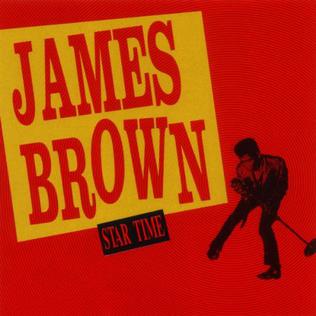
James Brown
Biography
James Brown was not simply a singer, bandleader, dancer, or entertainer. He was a force who reorganized rhythm in popular music. Born James Joseph Brown in 1933 in Barnwell, South Carolina, and raised in extreme poverty in and around Augusta, Georgia, he came out of a world where survival required movement, discipline, toughness, and imagination. Over more than five decades, he helped turn rhythm and blues into soul, soul into funk, and funk into one of the foundations of hip-hop. His music did not just sit on the beat. It broke the beat into parts, tightened every instrument around the groove, and made rhythm the main event.
Brown's childhood was harsh even by the standards of the Depression-era South. He grew up with little stability, spent time living with relatives, and as a boy found ways to earn money by singing, dancing, shining shoes, and doing small jobs. The poverty of his early life became one of the engines behind his adult work ethic. Brown often presented himself as proof that discipline could turn deprivation into power. That public idea was not just image-making. His career was built on relentless labor: rehearsals, touring, recording, business control, and a demand that everyone around him meet the standard he set.
As a teenager, Brown was arrested for robbery and sent to a juvenile detention facility. That period became a turning point because he met Bobby Byrd, a singer whose family helped him after his release and whose musical partnership would become crucial to Brown's rise. Byrd was already involved with a gospel group, and Brown gradually entered that circle. The music shifted from gospel toward rhythm and blues, and the group became the Famous Flames. Brown's voice, stage presence, and ambition quickly pushed him toward the front, though the group dynamic and Byrd's role remained important in the early years.
The Famous Flames' breakthrough came with 'Please, Please, Please' in 1956. The song was simple almost to the point of obsession, built around pleading repetition rather than lyrical complexity. That repetition was the point. Brown sounded as if he were trying to pull emotion out of one phrase until it broke open. The record became an R&B hit, but it also set the pattern for Brown's power as a performer. He could turn a small amount of material into drama through intensity, timing, and physical commitment. He did not need a complicated melody to dominate a room.
After that early success, Brown struggled to find another major hit. Some record executives doubted his staying power, and the Famous Flames went through a difficult period of touring and uncertain momentum. In 1958, 'Try Me' changed the story. It became Brown's first number one R&B hit and revealed his ability as a ballad singer. Later listeners sometimes think of him only as a shouter and funk innovator, but Brown's early success depended heavily on emotional slow songs. He could sing with tenderness, ache, and carefully controlled vulnerability. That ability gave depth to the more explosive stage persona that made him famous.
Brown's live performances were the true laboratory. By the early 1960s, he had developed one of the most demanding stage acts in American music. He danced with astonishing speed, used spins, drops, microphone tricks, and dramatic collapses, and turned concerts into tests of endurance. The famous cape routine, in which he would appear exhausted, be draped in a cape, led away from the microphone, and then throw it off to return for more, became a piece of theater that captured his entire public identity. James Brown was always almost spent and always coming back stronger.
His decision to record 'Live at the Apollo' in 1962 was one of the most important gambles of his career. King Records did not initially want to finance a live album, so Brown helped pay for it himself. Released in 1963, 'Live at the Apollo' became a major success and proved that his real power could be captured on record. The album is not just a concert document. It is a portrait of command. Brown controls the band, the pacing, the audience, and the emotional temperature. The screams from the crowd are part of the arrangement. The medleys move with the precision of a revue and the urgency of a revival meeting.
'Live at the Apollo' also made clear that Brown was more than a recording artist with hits. He was a bandleader in the older, stricter sense. His musicians had to watch him closely for cues. A gesture, a shout, or a movement could signal a break, a hit, a vamp, or a transition. Brown fined musicians for mistakes, demanded clean shoes and tight arrangements, and treated the stage like a workplace where excellence was compulsory. This could make him difficult and controlling, but it also produced a level of precision that became central to his sound.
In the mid-1960s, Brown's music began to change the shape of popular rhythm. 'Papa's Got a Brand New Bag' in 1965 was a breakthrough because it reduced the song's harmonic movement and emphasized the groove with new authority. The horns punched like percussion, the guitar scratched in clipped rhythmic patterns, the bass and drums locked down the center, and Brown's vocal became another rhythmic instrument. The song did not abandon R&B, but it pushed it toward funk. The emphasis shifted from chord changes and melody toward interlocking patterns and physical momentum.
'I Got You (I Feel Good)' later that year became one of Brown's most recognizable hits, with its explosive opening scream and bright horn riff. It is sometimes treated as his feel-good pop moment, but it also shows the discipline underneath the excitement. Brown's vocal phrasing rides the band with complete confidence, and the arrangement leaves no wasted space. Even at his most accessible, he was thinking rhythmically. The song became a calling card, but it was not the end point. Brown was still moving toward something harder and stranger.
That next step came with 'Cold Sweat' in 1967. Often described as one of the first fully realized funk records, it pushed Brown's rhythmic revolution into sharper form. The song is built around a minimal harmonic base, with the groove carrying the weight. The famous drum break by Clyde Stubblefield became one of the most important rhythmic moments in modern music, later sampled and studied across hip-hop and dance music. 'Cold Sweat' made the band sound like a machine of small moving parts: guitar, bass, horns, drums, and voice all acting as rhythm.
Brown's great bands of the 1960s and early 1970s were filled with extraordinary musicians, including saxophonist Maceo Parker, trombonist Fred Wesley, drummers Clyde Stubblefield and Jabo Starks, bassist Bootsy Collins, guitarist Jimmy Nolen, and many others. Brown's genius was partly in knowing how to use them. Nolen's 'chicken scratch' guitar style became one of funk's essential textures, playing short, percussive patterns rather than long melodic lines. The drummers created grooves that sounded tight but alive. The horns acted less like smooth decoration and more like rhythmic punctuation. Brown turned the band into a body, and every part had to move correctly.
The late 1960s also made Brown a major cultural figure beyond music. In 1968, he released 'Say It Loud - I'm Black and I'm Proud', one of the clearest musical statements of Black pride in the civil rights era. The song's call-and-response with children gave it a communal force, and its message fit a moment when Black political consciousness was becoming more direct and public. Brown was not a conventional radical, and his politics could be complex, sometimes conservative in tone and sometimes strongly self-determining. But that song became an anthem because it turned pride into a chant that could be shouted collectively.
Brown's role after the assassination of Martin Luther King Jr. in 1968 also became part of his public legacy. He performed in Boston the night after King's murder, and the concert was televised in an effort to help calm the city during a period of national unrest. Brown used his authority over the audience in real time, asking people to respect the stage and return to their seats when the crowd moved forward. The moment showed the unusual power he held: he was an entertainer, but also someone whose voice carried civic weight at a volatile time.
At the turn of the 1970s, Brown's sound became even more rhythmically advanced. A young Bootsy Collins and his brother Catfish Collins entered the band for a crucial period, bringing a loose, elastic funk energy that pushed Brown into a new phase. Tracks such as 'Get Up (I Feel Like Being a) Sex Machine', 'Super Bad', and 'Soul Power' stretched the groove, emphasized call-and-response, and turned the recording itself into something close to a live workout. Brown shouted instructions, named the band, demanded hits, and rode the rhythm like a preacher, coach, and drill sergeant at once.
'Sex Machine' is one of the great examples of Brown's method. The song depends on a vamp, a few key phrases, and the tension between repetition and release. Brown does not tell a story in the usual sense. He commands motion. The performance builds because the groove refuses to quit, and Brown's voice keeps directing energy through it. This was a different idea of songwriting from the pop standard. It was architecture built for the body first, but with enough detail to reward endless listening.
In 1971, Brown formed a new version of his backing band called the J.B.'s, with Fred Wesley and other key musicians helping define the early 1970s funk sound. The J.B.'s were not simply anonymous support. They released records of their own and became one of the most sampled and influential groups in funk history. Brown's organization during this period operated like a musical factory, producing singles, instrumental tracks, vocal features, live shows, and tightly controlled grooves. The pace was relentless, and Brown was both the star and the boss.
The 1973 soundtrack 'Black Caesar' and the album 'The Payback' later that year showed Brown adapting to the blaxploitation era and the darker, cinematic mood of 1970s funk. 'The Payback' is one of his strongest albums, with its slow-burning title track, heavy bass lines, and atmosphere of revenge, betrayal, and streetwise control. Unlike the short, explosive hits of the 1960s, much of 'The Payback' breathes and stretches. The grooves are deep, patient, and dangerous. Brown sounds older, harder, and more calculating, less like a young soul shouter and more like a kingpin of rhythm surveying his territory.
By the mid and late 1970s, disco, changing radio formats, and shifts in Black popular music began to challenge Brown's dominance. He had helped invent the rhythmic conditions that made funk and disco possible, but the marketplace moved quickly. Some of his later 1970s work struggled to match the impact of his peak period. Still, he remained a fierce live performer and an enormous influence on the musicians around him. Even when he was no longer leading the charts, his grooves were entering the bloodstream of modern music.
Brown's personal life and public record were complicated and often troubling. He was known for discipline, charisma, generosity, and Black entrepreneurial pride, but he was also controlling, volatile, and faced multiple legal problems. He was accused of violence toward women, including domestic abuse, and his later years included arrests and public scandals. A truthful biography cannot ignore that harm. Brown's greatness as a musician does not erase the damage in his personal history. His legacy contains both extraordinary artistic achievement and serious moral complication.
In the 1980s, Brown became newly visible to a younger audience. Hip-hop DJs and producers began building tracks from the drum breaks and grooves of his records. Clyde Stubblefield's 'Funky Drummer' break became one of the most sampled rhythms in music history, and Brown's shouts, horn hits, and grooves appeared throughout rap, dance, and electronic music. Brown had already influenced funk directly; now he was becoming the rhythmic foundation of an entirely new recorded language. Hip-hop did not merely admire him. It reused, reassembled, and extended his sound.
Brown also returned to the pop charts with 'Living in America' in 1985, recorded for the film 'Rocky IV'. The song, produced by Dan Hartman, gave Brown a bright, patriotic, arena-sized comeback and won him a Grammy. It was not as musically radical as his classic funk work, but it reintroduced him as a mainstream figure and reminded audiences of his explosive performance style. By then, he was already being honored as one of the foundational artists of rock and soul. In 1986, he was among the first inductees into the Rock and Roll Hall of Fame.
The later decades of Brown's career were marked by a mixture of celebration, survival, and instability. He continued touring under the title 'The Hardest Working Man in Show Business', a nickname he had earned through decades of punishing performance schedules. He received major honors, including a Grammy Lifetime Achievement Award and a Kennedy Center Honor. At the same time, his personal and legal troubles remained part of the public story. Brown's life did not settle into gentle elder-statesman simplicity. He remained proud, difficult, theatrical, and driven almost to the end.
As a vocalist, Brown changed the idea of what a lead singer could do. He used screams, grunts, shouts, spoken cues, rhythmic fragments, and repeated phrases as musical material. He could sing a ballad with real feeling, but his most revolutionary work came when he treated the voice as percussion. A Brown vocal could cue the horns, push the drummer, answer the bass, or create tension by delaying a phrase. He turned performance into arrangement. The line between singer and bandleader almost disappeared.
As a dancer, he belonged to the same broad tradition of Black showmanship that included tap, gospel performance, rhythm and blues revues, and the athletic precision of earlier entertainers. But Brown pushed that tradition into a new level of physical intensity. His footwork, splits, spins, and microphone control were not separate from the music. They were visual rhythm. Watching Brown move helped listeners understand the beat. He made the body explain the groove.
As a bandleader, he was one of the strictest and most consequential figures in American music. His methods could be harsh, and musicians often spoke about fines, pressure, and the difficulty of working under him. But many also acknowledged that Brown's demands created a sound no loose jam could have produced. Funk required discipline. The groove had to be exact enough to repeat and alive enough to burn. Brown understood that balance better than almost anyone.
His influence on later music is almost impossible to overstate. Funk artists such as Parliament-Funkadelic, Sly and the Family Stone, the Meters, and countless others existed in a world Brown helped make possible, even when they moved in different directions. Michael Jackson inherited parts of Brown's stagecraft, especially the combination of vocal attack, dance precision, and total performance control. Prince absorbed Brown's funk discipline and showmanship while adding his own harmonic and studio imagination. Hip-hop producers turned Brown's records into building blocks for a new culture of sampling. Dance music, R&B, pop, and rock all carry traces of his rhythmic thinking.
Brown died on December 25, 2006, in Atlanta, Georgia, after being hospitalized with pneumonia and heart-related complications. His death prompted public mourning, including memorial events that reflected the scale of his influence. There has been later public discussion and controversy around the circumstances of his death, but the officially reported cause involved heart failure following illness. What was never in doubt was the size of the musical inheritance he left behind.
The essential recordings tell the story of his evolution. 'Please, Please, Please' is the pleading beginning. 'Live at the Apollo' captures the live phenomenon and the early soul revue at its peak. 'Papa's Got a Brand New Bag' and 'I Got You (I Feel Good)' show the mid-1960s breakthrough into a sharper rhythmic style. 'Cold Sweat' marks the arrival of funk as a new language. 'Say It Loud - I'm Black and I'm Proud' captures Brown's cultural force in the Black pride era. 'Sex Machine' and 'Super Bad' show the groove becoming the whole world. 'The Payback' reveals the darker, deeper funk master of the 1970s.
James Brown matters because he changed where the center of music could be. Before him, popular songs usually revolved around melody, harmony, or lyric. Brown moved the center to rhythm. He made the one, the first beat of the bar, into a point of impact and organization. He trained bands to think in interlocking parts. He made repetition dramatic. He made the break, the vamp, the scream, and the groove into history-changing tools.
His story is not clean, and it should not be made clean. Brown was a genius of rhythm and performance, a symbol of Black pride and self-made power, a demanding employer, a wounded survivor of poverty, and a man whose personal behavior caused real harm. The music does not erase the contradictions, but the contradictions do not erase the music. At his best, James Brown sounded like pure command: a voice, a band, a body, and a beat all moving with one purpose. He did not just perform soul and funk. He built the rhythmic foundation on which much of modern popular music still stands.