
Kendrick Lamar
Biography
Kendrick Lamar Duckworth was born in Compton, California, in 1987, into a city whose name already carried a heavy musical and political history. His parents had moved from Chicago to Southern California before his birth, and Kendrick grew up in an environment shaped by church, family discipline, street pressure, and the long shadow of West Coast rap. He was a quiet, observant child rather than a natural loudmouth, and that watchfulness became one of the foundations of his writing. The young Kendrick was not simply absorbing rap as entertainment. He was studying cadence, character, warning signs, neighborhood codes, and the way adults carried old pain in ordinary conversation.
One early moment became part of his mythology because it genuinely connects his childhood to the music he later made. At around eight years old, he watched Tupac Shakur and Dr. Dre film the video for 'California Love' near the Compton Swap Meet. For many artists that kind of story would be treated as a cute coincidence, but for Kendrick it marked a more serious inheritance. Tupac's mix of theatrical anger, tenderness, paranoia, and community witness became one of the models for how rap could hold contradiction. Kendrick did not copy Tupac's voice, but he took seriously the idea that a rapper could be a reporter, actor, preacher, trickster, and unreliable narrator all at once.
As a teenager he began recording under the name K.Dot, releasing early mixtapes that showed raw technical hunger before his identity fully sharpened. His 2003 mixtape 'Youngest Head Nigga in Charge' helped bring him to the attention of Top Dawg Entertainment, the independent Los Angeles label run by Anthony 'Top Dawg' Tiffith. TDE became more than a business home. It was a proving ground, a local ecosystem where Kendrick could compete, experiment, and slowly outgrow the simpler bravado of his early material. Around him were artists such as Jay Rock, Ab-Soul, and ScHoolboy Q, who together formed Black Hippy, a loose collective that gave each member a different angle on Los Angeles rap.
Kendrick's early growth can be heard in the distance between K.Dot and the artist who released 'Overly Dedicated' in 2010. The mixtape still had the nervous energy of a young rapper trying to prove he could outrap anyone in the room, but it also showed a widening moral imagination. He was beginning to write not only from ego, but from doubt, temptation, memory, and social observation. He could move from dense internal rhyme to plain confession, and he was already drawn to voices within voices, letting a song become a small drama rather than a single argument.
The first major statement was 'Section.80' in 2011, an independent album that introduced Kendrick as a generational narrator rather than just another talented lyricist. Built around stories of young people born into the Reagan era and raised amid the aftershocks of drugs, poverty, religious judgment, and institutional neglect, the record was ambitious without sounding polished into safety. Songs such as 'A.D.H.D' and 'Keisha's Song' treated youth culture and exploitation with a novelist's attention to cause and consequence. The album's production was jazz-tinted, restless, and slightly rough around the edges, which suited Kendrick's voice at that stage: sharp, searching, sometimes preachy, sometimes painfully self-aware.
That same year, Kendrick's standing in Los Angeles changed in a public and symbolic way. During a show, veteran West Coast figures including Dr. Dre, Snoop Dogg, and The Game appeared with him and treated him as a torchbearer for the city. The moment mattered because Kendrick was not built like the old stereotype of a West Coast star. He was not selling himself as a gangsta caricature or party machine. He was small-framed, intense, bookish in his focus, and unusually willing to sound conflicted. The endorsement gave him historical weight, but his breakthrough came because he used that weight to make something deeply personal.
'good kid, m.A.A.d city', released in 2012, remains one of the clearest examples of rap as cinematic autobiography. Kendrick called it a short film, and the description fits because the album is structured less like a playlist than a sequence of scenes. It follows a teenage Kendrick through Compton, peer pressure, desire, violence, family phone calls, fear, and spiritual reckoning. The skits are not decoration; they are part of the album's architecture. His parents' voices, the borrowed van, the warnings, the prayers, and the ordinary domestic interruptions turn the record into a lived-in world.
Musically, 'good kid, m.A.A.d city' balanced accessibility and narrative discipline. 'Swimming Pools' could work as a club record, but its real subject was the social performance of drinking and the private unease underneath it. 'Backseat Freestyle' sounded like reckless teenage boasting because that was the point: Kendrick was acting out the voice of a boy trying on power before he understands its cost. 'Sing About Me, I'm Dying of Thirst' stretched the album into something more intimate and devastating, using shifting perspectives to show how memory, guilt, and survival become tangled. The production, involving figures such as Sounwave, Terrace Martin, Pharrell Williams, Hit-Boy, and Just Blaze, gave the record enough range to feel both local and expansive.
The success of 'good kid, m.A.A.d city' made Kendrick a major commercial artist, but he did not respond by simplifying himself. Instead, he made 'To Pimp a Butterfly' in 2015, a dense, politically charged album that pulled from jazz, funk, soul, spoken word, and West Coast rap. It was recorded with a broad circle of musicians and producers, including Sounwave, Terrace Martin, Thundercat, Flying Lotus, Kamasi Washington, and others, and it sounded like a live organism rather than a conventional rap blockbuster. Bass lines wandered, horns argued, grooves shifted, and Kendrick's voice became a cast of characters: furious, mocking, wounded, prophetic, childish, and exhausted.
'To Pimp a Butterfly' arrived during a period of renewed public protest over racism and police violence in the United States, and it met that moment without turning into a slogan sheet. 'Alright' became an anthem because its hook offered communal release, but the album around it was far more troubled than simple uplift. 'The Blacker the Berry' forced rage and self-accusation into the same room. 'u' presented Kendrick in a fractured state of self-reproach. 'King Kunta' turned funk swagger into a statement about exploitation, authorship, and survival. The album's recurring poem, gradually revealed across the track list, created a spine that led toward the imagined conversation with Tupac on 'Mortal Man'. It was an audacious device, but Kendrick used it to ask what leadership, fame, and responsibility mean after the heroes are gone.
A key part of Kendrick's uniqueness is that he often treats success as a moral problem. Many rappers write about escaping their circumstances; Kendrick keeps asking what escape costs, who gets left behind, and whether the survivor becomes distorted by the applause. That concern runs through 'To Pimp a Butterfly', but it also explains why his public image has never fit neatly into celebrity culture. He can be intensely visible during an album cycle and then almost unreachable afterward. He gives relatively few interviews, avoids constant online performance, and lets the work carry most of the argument. That privacy has made him feel mysterious, but it also protects the seriousness of his writing.
In 2016, Kendrick released 'untitled unmastered.', a collection of demos and live-sounding pieces connected to the 'To Pimp a Butterfly' period. It could have been a minor leftover project, but it revealed how fertile that era had been. The tracks were loose, strange, and rhythmically daring, showing Kendrick's interest in process rather than polish. He was willing to expose sketches because even his sketches had tension: apocalyptic imagery, jazz improvisation, sudden humor, and rhythmic control that could turn a half-finished idea into something magnetic.
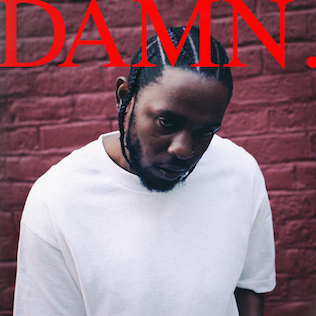
'DAMN.', released in 2017, was a sharp turn in surface sound but not in moral intensity. Where 'To Pimp a Butterfly' spread outward into band arrangements and historical argument, 'DAMN.' compressed itself into harder beats, cleaner hooks, and stark one-word titles such as 'DNA.', 'HUMBLE.', 'FEAR.', and 'LOVE.'. The album was easier to enter on first listen, but it was not simple. It dealt with pride, weakness, faith, punishment, family inheritance, and the possibility that a life can be read as either destiny or accident. The production, with contributors including Mike Will Made-It, Sounwave, DJ Dahi, James Blake, and others, gave Kendrick a colder and more direct frame.
The most remarkable thing about 'DAMN.' is how it functioned on two levels at once. It produced major singles and broadened Kendrick's mainstream reach, while also inviting close structural reading. The album's sequencing, themes of reversal, and later collector's edition with the track list inverted encouraged listeners to think of it as a moral loop rather than a straight line. In 2018 it won the Pulitzer Prize for Music, the first non-classical or jazz work to receive that honor. The award did not make Kendrick important; the music had already done that. But it did mark a public institutional recognition that rap could be judged as composition, literature, performance, and cultural document at the highest level.
Kendrick's role as curator of 'Black Panther: The Album' in 2018 showed another side of his power. Rather than simply contributing a single to a major film, he helped shape a companion album that connected blockbuster cinema to contemporary Black music across the diaspora. 'All the Stars' with SZA became the most visible song, but the project also mattered because Kendrick approached curation as world-building. He understood how to place voices, textures, and regional energies around a larger narrative without making the album feel like a random soundtrack tie-in.
After 'DAMN.', Kendrick entered a long gap between solo albums, and the silence changed the way people listened for him. In 2020 he and Dave Free announced pgLang, a creative company designed to work across music, film, design, and visual storytelling. The move made sense because Kendrick's albums had always been audiovisual in spirit, full of characters, settings, symbols, and carefully controlled presentation. His partnership with Dave Free, who had directed or co-directed many key videos connected to Kendrick's work, became central to how his art looked as well as how it sounded.
'Mr. Morale & The Big Steppers' arrived in 2022 after five years without a solo studio album, and it was one of the most divisive and revealing records of his career. Instead of returning with a victory lap, Kendrick made a double album about therapy, family patterns, grief, ego, hypocrisy, faith, and the limits of being treated as a savior. The tap-dancing motif, the spare piano passages, the tense drums, and the theatrical pacing made the album feel like a staged confrontation with himself. It was not built primarily for easy replay or public anthems, though it contained songs with immediate force. It asked listeners to sit with discomfort.
The album's importance lies partly in its refusal to flatter Kendrick's own image. On earlier records he had often carried the burden of community witness; on 'Mr. Morale & The Big Steppers' he questioned whether that burden had become another kind of performance. Songs such as 'United in Grief', 'Father Time', 'Mother I Sober', and 'Mirror' explored personal history without turning confession into cheap spectacle. The record also sparked debate because Kendrick did not present healing as clean or heroic. He made it sound repetitive, awkward, unfinished, and sometimes selfish. That made the album less universally loved than 'good kid, m.A.A.d city' or 'To Pimp a Butterfly', but it deepened the portrait of him as an artist willing to risk admiration in order to tell a harder truth.
Kendrick's live performances have played a major role in his reputation. He is not a flamboyant performer in the traditional rock-star sense; his power comes from control, pacing, and intensity. Onstage he often uses stillness as a weapon, letting the words and arrangements create pressure. His tours after 'DAMN.' and 'Mr. Morale & The Big Steppers' showed how carefully he thinks about staging, costume, lighting, and movement. The performances were not just concerts but extensions of the album worlds, built around discipline rather than casual charisma.
In 2024, Kendrick returned to the center of popular music through one of the most public rap conflicts of the streaming era. His verse on Future and Metro Boomin's 'Like That' escalated long-running competitive tension with Drake, and the exchange quickly became a major cultural event. Kendrick's 'Not Like Us', produced by Mustard, was especially consequential because it worked both as a diss record and as a regional celebration. Its bounce, chant-like hook, and Los Angeles energy turned a feud track into a mass-participation record. The song won five Grammy Awards in 2025, including Record of the Year and Song of the Year, a rare level of institutional recognition for a rap battle record.
Later in 2024, Kendrick surprise-released 'GNX', an album that felt leaner, more immediate, and more West Coast in its public posture than 'Mr. Morale & The Big Steppers'. Its title referenced the 1987 Buick GNX, tying personal mythology to car culture and regional memory. The album included production from longtime collaborators and newer partners, with Sounwave and Jack Antonoff among the credited figures, and it opened another phase in Kendrick's career: less burdened by proving rap's artistic legitimacy, more interested in authority, momentum, and the sound of Los Angeles speaking loudly again. Songs such as 'squabble up', 'tv off', and 'luther' showed different sides of that mode, from percussive chant to melodic collaboration.
By the mid-2020s Kendrick had become something rare: a rapper who could dominate charts and award ceremonies without surrendering the density of his work. His 2025 Super Bowl halftime performance placed him on one of the largest stages in American entertainment, and the moment carried extra weight because it followed a year in which he had turned lyrical combat, regional pride, and formal control into mainstream spectacle. At the 2026 Grammy Awards, 'GNX' and its songs added further major wins, and Kendrick became the most awarded rapper in Grammy history. Awards are not the deepest measure of his music, but in his case they show how far his kind of rap writing has traveled: from Compton mixtapes to institutions that once treated hip-hop as peripheral.
What makes Kendrick Lamar distinctive is not only technical skill, though his technical skill is enormous. He can bend his voice into different ages, moods, and moral positions. He can rap with clipped precision, wounded melody, cartoonish exaggeration, or sermon-like force. He uses rhyme not just as decoration but as pressure, building momentum until a line feels like a verdict. More importantly, he understands albums as complete arguments. Each major release has its own grammar: the neighborhood film of 'good kid, m.A.A.d city', the Black musical collage of 'To Pimp a Butterfly', the compressed moral puzzle of 'DAMN.', the therapeutic theater of 'Mr. Morale & The Big Steppers', and the regional command of 'GNX'.
His influence can be heard in the way later rappers approached concept, vulnerability, jazz texture, and album structure. He helped make room for mainstream rap that could be commercially powerful without abandoning complexity. At the same time, his career warns against reducing serious music to respectability. Kendrick is not important because he made rap acceptable to older institutions. He is important because he used rap's own tools - voice, rhythm, exaggeration, witness, insult, humor, memory, contradiction - with unusual discipline and imagination. He turned the album format into a place where private guilt, neighborhood history, spiritual dread, political anger, and competitive pride could all occupy the same body.
Kendrick Lamar's story is still active, which makes any final judgment premature. But the shape of his achievement is already clear. He emerged from Compton with a writer's eye, a battle rapper's nerve, a dramatist's sense of character, and a perfectionist's control over form. He has made albums that listeners argue with, study, chant in public, and return to during moments of national tension or private doubt. His best work does not offer easy comfort. It asks what survival does to the survivor, what success demands from the successful, and whether a voice can carry a community without pretending to be pure. That unresolved tension is the heart of his art, and it is why his music continues to feel alive long after the first impact fades.