
Motörhead
Biography
Motorhead was born from rejection, stubbornness, and volume. The band began in 1975 after Ian Fraser Kilmister, known to almost everyone as Lemmy, was fired from Hawkwind following a drug arrest in Canada. Hawkwind had given him a place in the British space-rock underground, but Lemmy did not want to make drifting cosmic music forever. He wanted something faster, dirtier, more direct, and more physical. He took the name Motorhead from the last song he had written for Hawkwind and built a band around a simple idea: rock and roll played with the force of a machine falling down a staircase.
Lemmy was already a distinctive figure before Motorhead existed. Born in Stoke-on-Trent in 1945 and raised partly in Wales, he came out of the postwar British rock generation that treated American rhythm and blues, early rock and roll, and amphetamine-charged club music as a way of life. He had worked as a roadie for the Jimi Hendrix Experience, played in bands such as the Rockin' Vickers and Sam Gopal, and then joined Hawkwind as a bassist even though he approached the instrument more like a rhythm guitarist. That detail became essential. Lemmy did not play bass as a smooth support role. He strummed chords, drove the midrange, and made the instrument snarl.
The first Motorhead lineup included guitarist Larry Wallis, formerly of the Pink Fairies, and drummer Lucas Fox. Early recordings were chaotic, and the band struggled to find stability. Fox was replaced by Phil Taylor, soon known as Philthy Animal Taylor, a drummer whose loose, explosive energy became one of the group's defining ingredients. Fast Eddie Clarke then joined on guitar, and the classic Motorhead trio was born: Lemmy on bass and vocals, Clarke on guitar, and Taylor on drums. This lineup did not look like a conventional heavy metal band, a punk band, or a hard rock act. It looked like three men who had been locked in a rehearsal room with too much amplification and no interest in subtlety.
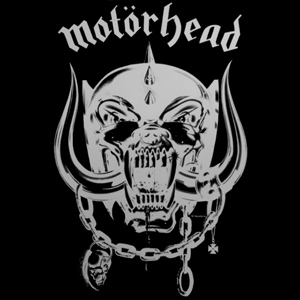
Motorhead's early career was difficult. Their first album sessions were initially shelved, and the band was nearly dropped before it had properly started. The 1977 album 'Motorhead' finally introduced their sound to a wider audience, though it was still rough around the edges. It included the title track, carried over from Lemmy's Hawkwind days, and showed the band's basic formula: distorted bass, hammering drums, blunt guitar, and Lemmy's sandpaper voice. The record was not polished, but polish was never the point. Motorhead sounded like a pub fight turning into a train wreck, and that became part of their appeal.
The band's identity was unusual because it crossed tribal lines. Heavy metal fans embraced the volume and aggression. Punks recognized the speed, simplicity, and contempt for refinement. Bikers loved the road-damaged attitude. Lemmy always resisted being described as strictly metal, insisting that Motorhead played rock and roll. He had a point. Beneath the distortion and speed were Chuck Berry, Little Richard, early British beat music, blues-based riffs, and the idea that a song should hit quickly and leave a mark. Motorhead did not use fantasy escapism in the way many metal bands did. Their world was gambling, war, bad luck, sex, betrayal, speed, bars, roads, and survival.
The breakthrough came with 'Overkill' in 1979. Produced by Jimmy Miller, who had worked with the Rolling Stones, the album captured Motorhead with far more force than the debut. The title track was a turning point for heavy music. Phil Taylor's double-bass drumming gave the song a relentless forward motion that influenced generations of metal drummers. The rhythm did not feel ornamental or technical for its own sake. It felt like acceleration as an attitude. Songs such as 'Stay Clean', 'No Class', and 'Metropolis' gave the band an identity that was crude, funny, aggressive, and strangely disciplined under the noise.
'Overkill' mattered because it clarified that Motorhead were not just loud. They were fast in a new way. Their music did not have the elaborate structures of progressive rock or the theatrical polish of classic heavy metal. It reduced rock to impact: riff, beat, voice, momentum. Clarke's guitar sliced through the mix while Lemmy's bass filled the space a second guitar might normally occupy. Taylor's drumming was wild but musical, forever pushing the band toward collapse without letting it fall. The trio sounded less like three separate players than one overdriven engine.
Later in 1979, Motorhead released 'Bomber', another key album from the classic period. Its title track became one of the band's signature songs, helped by the famous bomber-shaped lighting rig used on tour. That stage prop captured Motorhead's sense of scale: not glamorous in a polished arena-rock way, but spectacular in a battered, dangerous, working-class style. The album also contained 'Dead Men Tell No Tales' and 'Stone Dead Forever', songs that showed the band's gift for turning simple phrases into declarations. Motorhead were becoming a genuine force in Britain, moving from underground menace to chart presence without softening their sound.
The peak of the classic lineup arrived with 'Ace of Spades' in 1980. The title track became Motorhead's most famous song and one of heavy music's great anthems. Built around a riff that seems to lunge forward before the listener is ready, it compressed Lemmy's worldview into less than three minutes: risk, fatalism, humor, and the refusal to complain when the cards go bad. The song's gambling imagery was not just a subject; it was a philosophy. Motorhead's music often felt like a bet placed with no safety net.
The album 'Ace of Spades' was more than one song. 'Love Me Like a Reptile', 'Shoot You in the Back', 'The Chase Is Better Than the Catch', and 'Jailbait' captured the band's early mixture of speed, sleaze, and blunt force. Some of the lyrics belong clearly to their time and can sound harsh or crude decades later, but musically the record remains a model of economy. The production gave the band enough clarity without making them clean. Lemmy's voice was not conventionally beautiful, but it was perfect for the material: hoarse, commanding, half-sung and half-barked, with the authority of someone who had lived inside every bad decision the songs described.
In 1981, Motorhead released the live album 'No Sleep 'til Hammersmith', recorded during the classic lineup's rise and named after the band's relentless touring life. It became a number one album in the United Kingdom and confirmed Motorhead's reputation as one of the most powerful live bands of the era. The album is important because Motorhead's studio records, strong as they were, could not fully explain the physical shock of the band onstage. Live, the songs became faster, rougher, and more communal. Lemmy stood at the microphone angled upward, almost singing into the sky, while the band blasted forward with little ceremony.
The success did not make Motorhead stable. The classic lineup was volatile, and the pressure of touring, personality clashes, and the band's hard lifestyle took its toll. In 1982, during the period around 'Iron Fist', tensions increased. Fast Eddie Clarke left the band, reportedly unhappy with the direction and with the recording of a collaboration with Wendy O. Williams of the Plasmatics. His departure ended the most famous version of Motorhead. Clarke had been essential: his bluesy but aggressive guitar gave the early records shape and bite. Without him, the band had to change.
Thin Lizzy guitarist Brian Robertson joined for 1983's 'Another Perfect Day', one of the strangest and most debated albums in the Motorhead catalog. Robertson brought a more melodic, technically fluid guitar style, and the result sounded different from the brutal simplicity of the Clarke era. Songs such as 'Shine' and 'Dancing on Your Grave' had a more colorful guitar presence, and over time the album gained respect for its musical quality. At the time, many fans were confused or hostile. Robertson did not fit the band's rough image easily, and the collaboration was short-lived. His stage clothes and musical instincts clashed with Motorhead's no-nonsense identity, making the period feel like an experiment that could never last.
After Robertson left, Motorhead expanded to a four-piece with guitarists Phil Campbell and Michael Burston, known as Wurzel. This changed the band's attack. Instead of the stripped-down trio format, Motorhead now had twin guitars, giving their sound more weight and flexibility. Phil Taylor also left and was replaced by Pete Gill for a period, including the 1986 album 'Orgasmatron'. Produced by Bill Laswell, 'Orgasmatron' gave Motorhead one of their darkest and heaviest records of the decade. The title track, with its slow, grinding force and anti-authoritarian imagery, became a late classic, proving that Motorhead did not need constant speed to sound dangerous.
The mid and late 1980s were a less commercially dominant period, but they were not empty years. Motorhead had become an institution of stubborn persistence. Albums such as 'Rock 'n' Roll' and later '1916' showed different sides of the band. '1916', released in 1991, was especially significant because it broadened the emotional range. The title track, a somber song about young soldiers in World War I, stripped away much of the usual bravado and revealed Lemmy's interest in history, war, and the absurd waste of human life. It reminded listeners that beneath the leather, volume, and jokes was a literate songwriter with a strong sense of memory and consequence.
Lemmy's personality was central to Motorhead in a way that went beyond frontman status. He was the only constant member from 1975 until his death, and the band effectively existed as an extension of his values. He could be funny, blunt, romantic, argumentative, loyal, and impossible to separate from the mythology he created. He loved rock and roll history, collected military memorabilia, read widely, and spoke often with a dry, unsentimental wit. His public image included heavy drinking and a hard road lifestyle, but reducing him to those habits misses the craft and intelligence behind the music. Lemmy understood exactly what Motorhead was and what it was not.
The 1990s brought more lineup changes and a gradual move toward the final long-running version of the band. Mikkey Dee, formerly of King Diamond and Don Dokken's band, joined as drummer in 1992 and became one of Motorhead's most important later members. Dee was more technically precise than Phil Taylor, with a powerful, controlled style that allowed the band to remain ferocious as it aged. With Lemmy, Phil Campbell, and Dee, Motorhead eventually settled into a remarkably durable trio. Wurzel left in 1995, and the three-piece format returned, though now with Campbell as the sole guitarist and Dee as the engine.
Albums such as 'Bastards', 'Sacrifice', 'Overnight Sensation', and 'Snake Bite Love' showed Motorhead navigating a music world that had shifted around them. Grunge, alternative rock, extreme metal, and industrial music had changed heavy music's landscape, but Motorhead did not chase trends. They continued doing what they did best: fast, loud, riff-driven rock and roll with occasional shifts in mood. That refusal to bend could make some albums feel familiar, but it also became the foundation of their credibility. Motorhead were not fashionable because fashion had nothing to do with them.
The early 2000s brought renewed respect. Younger metal bands, punk bands, and hard rock musicians openly acknowledged Motorhead's influence, and Lemmy became a widely recognized elder figure in heavy music. The band continued releasing albums at a steady pace: 'We Are Motorhead', 'Hammered', 'Inferno', 'Kiss of Death', and 'Motorizer' all extended the catalog. 'Inferno', released in 2004, was one of the strongest later records, featuring tracks such as 'Killers' and 'Whorehouse Blues', the latter showing the band's acoustic blues side with humor and grit. It proved that late-period Motorhead could still surprise without betraying the core sound.
The band's influence is enormous because it sits between genres. Thrash metal bands learned from Motorhead's speed, blunt riffs, and aggression. Metallica, Slayer, Megadeth, and countless others absorbed parts of their approach. Punk musicians admired their directness and refusal to posture as refined artists. Hardcore bands heard in Motorhead a model of volume without pretension. Even extreme metal, from black metal to death metal, owes something to the way Motorhead made speed and distortion feel elemental. Yet Motorhead themselves remained stubbornly outside category. Lemmy's preferred label, rock and roll, was not modesty. It was a claim about roots.
Motorhead's sound was built on a few recognizable traits. Lemmy's bass occupied the middle of the mix like a second rhythm guitar, often using chords and distortion instead of smooth low-end support. The drums drove forward rather than decorating the songs. The guitar riffs were usually direct, memorable, and designed for movement. Solos were secondary to impact. The lyrics were often written in plain, memorable language, full of gambling metaphors, road imagery, war references, dark jokes, and blunt observations about power and hypocrisy. Nothing was hidden behind elaborate poetry. Motorhead said what it meant and moved on.
The band also had a real sense of humor, something sometimes missed by listeners who only hear the noise. Lemmy's lyrics could be grim, but they often carried a wink, a shrug, or a bitter punchline. Motorhead never asked to be treated as sacred art. They were serious about playing, serious about the road, and serious about loyalty to their audience, but they were not solemn. That balance helped explain their endurance. They were loud enough for metalheads, fast enough for punks, dirty enough for bikers, and funny enough to avoid becoming pompous.
The final decade of Motorhead was marked by both productivity and physical decline. Albums such as 'The World Is Yours', 'Aftershock', and 'Bad Magic' kept the band active into the 2010s. Lemmy's health became a growing concern, and some shows were cut short or cancelled as his body struggled with the demands of performing. Yet he kept returning to the stage. This persistence was admired by fans, though it also made the final years difficult to watch at times. Motorhead had always been a road band, and Lemmy seemed almost inseparable from the act of performing.
In 2015, the classic Motorhead story reached its end. Phil Taylor died in November of that year. Lemmy died on December 28, 2015, only days after his 70th birthday, after being diagnosed with an aggressive cancer and while also suffering serious health problems. The surviving members made clear that Motorhead could not continue without him. That decision was not merely sentimental. Lemmy was not just the singer or bassist. He was the axis around which every version of the band had turned. Without him, Motorhead as a living band no longer existed.
Fast Eddie Clarke died in 2018, meaning that all three members of the classic 'Overkill', 'Bomber', and 'Ace of Spades' lineup were gone. This gave the early records an added historical weight. They now stand not only as documents of a scene and a sound, but as the preserved force of three musicians whose chemistry cannot be recreated. Later lineups were important, especially the long Lemmy, Campbell, and Dee era, but the Taylor and Clarke years remain the furnace in which the legend was forged.
Motorhead's legacy is not complicated in the way some bands' legacies are complicated by reinvention. Their greatness came from consistency, but not laziness. They understood their mission early and kept refining it across decades. Some records are stronger than others, and the catalog is too large to be equally essential, but the central identity never weakened: loud, fast, dirty, funny, defiant, and rooted in rock and roll's most physical instincts. They were not virtuosos in the progressive sense, and they were not interested in elegance. Their craft was momentum.
The essential albums tell the story clearly. 'Overkill' is the breakthrough, the moment the engine locks into place. 'Bomber' expands the attack and turns the band into a major live force. 'Ace of Spades' is the immortal statement, the record where attitude, songwriting, and sound align perfectly. 'No Sleep 'til Hammersmith' captures the stage power. 'Orgasmatron' shows the darker, heavier mid-1980s version. '1916' reveals emotional depth and historical imagination. 'Inferno' proves the later band still had bite. Around those records sits a long body of work that may not always surprise, but almost always sounds unmistakably like Motorhead.
Why does Motorhead matter? Because they changed the physical language of heavy music. They made speed feel primitive and modern at the same time. They connected punk and metal before such crossovers became common. They showed that distortion, repetition, and volume could become a philosophy. They influenced musicians who would go on to make thrash, speed metal, hardcore punk, and extreme metal, yet they remained proudly themselves: a rock and roll band with the volume turned beyond reason.
Motorhead also matter because Lemmy became one of rock's last genuinely believable lifers. He did not seem designed by the music industry, and he did not age into respectability in the usual sense. He remained at the bar, on the road, at the microphone, with the bass high against his chest and the microphone tilted above him. The image became famous because it was not only an image. It was work, repetition, stubbornness, and a refusal to let rock and roll become polite.
Today, Motorhead's music still sounds like a challenge. It does not ask whether the listener is comfortable. It does not decorate itself with sophistication. It arrives, hits, laughs, and keeps moving. Behind the noise is a band that understood identity better than most: Lemmy's overdriven bass, Clarke or Campbell's guitars, Taylor or Dee's drums, and that cracked voice turning bad luck into a battle cry. Motorhead did not simply play loud rock. They made loudness into character, speed into humor, and refusal into a lifetime's work.