
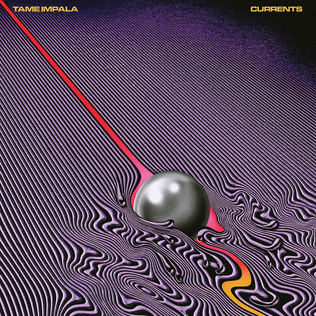
Tame Impala
Biography
Tame Impala is the name of a live band onstage, but in the studio it has always been the private universe of Kevin Parker. Born in Sydney in 1986 and raised in Perth, Western Australia, Parker became one of the most distinctive modern figures in psychedelic pop by turning solitude into sound. He writes, records, performs, and produces nearly all of Tame Impala's music himself, shaping songs that can feel handmade and enormous at the same time. His records often sound like a person thinking too much in a room full of glowing equipment: drums compressed until they pulse like machinery, guitars treated until they shimmer, bass lines that move with dance-floor confidence, and melodies that drift between doubt, longing, and escape.
Parker's path was not the usual story of a frontman assembling a band and conquering a scene. He was a home-recording obsessive before he became a festival headliner. Growing up in Western Australia, he absorbed classic psychedelic rock, melodic pop, electronic music, and the practical habits of a musician who could not rely on major studios or industry machinery. Perth was geographically distant from the usual centers of rock and pop business, and that distance became part of Tame Impala's identity. Parker learned to make records inwardly, by experimenting with gear, playing multiple instruments, and treating production not as decoration but as songwriting itself.
Before Tame Impala became an international name, Parker played in local bands and moved through Perth's small but fertile music community. He was connected with musicians who would later become part of Pond and other related projects, and that loose creative circle gave him a place to test ideas. Tame Impala began as Parker's recording project, with early songs circulating online and through independent channels before Modular Recordings became involved. The first Tame Impala EP, released in 2008, already showed the outlines of his world: hazy guitars, blown-out drums, old psychedelic colors, and songs that sounded as if they had been recorded in a bedroom but imagined on a much larger screen.
The early Tame Impala sound was often compared to late 1960s psychedelic rock, especially because Parker's voice could resemble John Lennon's nasal, dreamlike upper register. But the comparison, while understandable, did not fully explain what he was doing. Parker was not simply reviving old rock textures. He was filtering them through modern isolation, modern recording habits, and a producer's fascination with sound design. The guitars were fuzzy, but the drums were unusually central. The songs could be loose and swirling, yet the grooves were carefully built. From the beginning, Tame Impala was less a retro act than a one-man laboratory for making old colors behave in new ways.
The debut album, 'Innerspeaker', released in 2010, was the first complete statement. Much of it was recorded at Wave House, a remote studio in Western Australia near the Indian Ocean, a location that has become part of the album's mythology because the music itself feels spacious, sunstruck, and slightly removed from ordinary life. Produced by Parker and mixed by Dave Fridmann, known for work with The Flaming Lips and Mercury Rev, 'Innerspeaker' turned Parker's bedroom psychedelia into something wider and more physical. Songs such as 'It Is Not Meant to Be', 'Solitude Is Bliss', 'Lucidity', and 'Expectation' moved with a combination of heavy drums, phasing guitars, and drifting vocals.
'Innerspeaker' mattered because it arrived at a time when guitar music was often being discussed as if it had run out of futures. Parker found a way to make psychedelic rock feel alive without pretending the 1960s had never ended. The album's lyrics were already drawn toward inner conflict: wanting connection but needing distance, feeling out of step, protecting private space. 'Solitude Is Bliss' became almost a manifesto, not in a cold way but in a nervous, self-aware one. Parker's persona was not the swaggering rock singer. He sounded like someone suspicious of crowds even as his music began attracting them.
The live version of Tame Impala required a band, and Parker built one around trusted musicians from the Perth scene, including Jay Watson and later other players who helped translate his recordings to the stage. This created a useful tension. In the studio, Tame Impala was controlled and solitary. Onstage, it became communal, loud, and physical. Parker was never a conventional rock showman, but the concerts grew into immersive experiences, with lights, projections, and extended grooves turning the songs into something more expansive. The project could be introverted at the source and extroverted in public.
'Lonerism', released in 2012, was the album where Parker's private language became fully his own. It was again largely written, recorded, performed, and produced by him, with a contribution from Jay Watson on 'Apocalypse Dreams' and 'Elephant', and it expanded the sonic palette of 'Innerspeaker' into something brighter, stranger, and more emotionally direct. Parker recorded in different places, including Perth and France, and the album's cover used a photograph he took in Paris, looking through a fence at people in the Jardin du Luxembourg. That image captured the album's emotional center: watching life from a distance, wanting to join but remaining separated by some invisible barrier.
Musically, 'Lonerism' was richer and more unstable than the debut. The drums were huge and heavily treated. Synthesizers became more important. The guitars still swirled, but they no longer carried the whole architecture. 'Apocalypse Dreams' opened outward with shifting sections and a sense of emotional release that felt both ecstatic and anxious. 'Mind Mischief' turned romantic uncertainty into a warped, melodic rush. 'Music to Walk Home By' showed Parker's gift for stacking melody, rhythm, and distortion until the song felt like a thought spiral. 'Feels Like We Only Go Backwards' became one of his most beloved songs, partly because its melody was immediate and partly because its lyric captured a universal form of frustration without overexplaining it.
'Lonerism' also made clear that Parker's production style was not an accessory to the songs. The sound was the psychology. Compression, flanging, reverb, and distortion became emotional tools. The drums often seemed too large for the room, as if ordinary feelings had been magnified until they became weather systems. Parker's voice sat inside the mix rather than above it, and that choice made the songs feel internal, as if the listener was hearing thoughts before they had been turned into confident speech. The album earned major critical praise and helped Tame Impala move from cult psych-rock favorite to one of the most important alternative acts of the decade.
After 'Lonerism', Parker faced a problem that often confronts artists who perfect a sound early: whether to repeat it or risk breaking the spell. His answer was 'Currents', released in 2015, a sleek, synth-heavy album that transformed Tame Impala from psychedelic rock project into a broader pop force. The guitars receded, electronic textures came forward, and the grooves became cleaner and more danceable. But the emotional subject remained recognizably Parker's: self-doubt, transformation, romantic collapse, and the uneasy freedom of becoming someone new.
'Currents' was a turning point in every sense. Parker wrote, recorded, produced, and mixed the album himself, and the level of control is audible. 'Let It Happen' opened the record with a nearly eight-minute statement of surrender and motion, built around looping structures, disco pulse, and a famous mid-song section where the sound seems to jam and stutter before breaking open again. It was not a typical rock single, but it became one of the defining tracks of Tame Impala's career. 'The Less I Know the Better' turned heartbreak and jealousy into a bass-driven pop song so immediate that it crossed far beyond the indie audience. 'Eventually' balanced emotional resignation with explosive production, while 'Cause I am a Man' leaned into falsetto soul and soft-rock textures.
The importance of 'Currents' lies in how completely it changed the scale of Tame Impala without losing Parker's fingerprints. The album was polished, but not anonymous. Its surface was smoother than 'Lonerism', yet underneath it was still a record about instability. Parker's decision to mix it himself was significant because it showed how much he viewed sonic detail as identity. The drums, synths, vocal layers, and bass were placed with obsessive care. 'Currents' made him not only a respected songwriter but a producer admired across pop, hip-hop, R&B, and electronic music circles.
The success of 'Currents' changed Parker's career. Tame Impala became a major festival act, and Parker became an increasingly sought-after collaborator. Artists from different worlds were drawn to his ability to make music feel psychedelic without losing pop clarity. He worked with or contributed to projects connected to Mark Ronson, Lady Gaga, Travis Scott, SZA, Gorillaz, Theophilus London, Diana Ross, Dua Lipa, Justice, and others. These collaborations did not turn him into a standard behind-the-scenes hitmaker, but they showed how adaptable his production language had become. A sound that began in Perth bedrooms could now function inside global pop.
For several years after 'Currents', Parker's perfectionism became part of the Tame Impala story. He was open about taking time with music and resisting pressure to release work before it felt right. That approach could frustrate fans, but it also explained why his albums felt so internally coherent. He was not simply collecting tracks. He was building environments. The next Tame Impala album had to answer a difficult question: what happens after a record that turns an inward psychedelic project into a worldwide brand?
'The Slow Rush', released in 2020, answered by making time itself the subject. Parker recorded much of the album between Los Angeles and his studio in Fremantle, and it sounded more sunlit, polished, and rhythmic than anything he had made before. The album leaned into disco, soft rock, house music, and widescreen pop, but its lyrical focus was restless and reflective. Parker had become older, more successful, and more publicly visible, yet the songs still circled anxiety, memory, regret, and the fear of wasting life. 'Borderline', 'Lost in Yesterday', 'Posthumous Forgiveness', 'Breathe Deeper', and 'It Might Be Time' all dealt in different ways with the pressure of moving forward.
'Posthumous Forgiveness' was especially important because it brought Parker's family history into sharper focus. The song addressed his late father, moving through anger, grief, distance, and tenderness without resolving those emotions too neatly. Structurally, it shifted between sections, beginning with a tense, clipped groove and opening later into something warmer and more vulnerable. It showed that Parker's increasing polish did not mean emotional flattening. He could still make a song feel like an argument with himself.
'The Slow Rush' arrived just as the world entered the COVID-19 pandemic, which disrupted touring plans and changed the way many listeners experienced the album. Instead of immediately becoming a shared festival record, it became for some people a private soundtrack to suspended time. That strange timing deepened the album's themes. A record about delay, memory, and time slipping away was released into a period when normal time seemed to break. Parker had not written it for that moment specifically, but the coincidence made the album feel unusually resonant.
As Tame Impala's audience expanded, Parker's public identity remained unusually modest for someone whose music filled arenas. He often came across as thoughtful, slightly awkward, and intensely focused on sound rather than celebrity. That did not mean he lacked ambition. His records are extremely ambitious. But the ambition was usually directed toward the studio, toward making a snare drum hit correctly, finding the right synth tone, or reshaping a song until its emotional and physical effects aligned. He became a rare modern rock figure whose mystique came not from scandal or theatrical persona, but from craft.
By the mid-2020s, Parker had become a bridge between several musical worlds. To rock listeners, he was one of the few guitar-era artists to create a truly modern psychedelic language. To pop artists, he was a producer who could bring color, groove, and atmosphere without overwhelming a song. To electronic and dance listeners, he was increasingly connected to club music's sense of repetition and release. His collaboration with Justice on 'Neverender' brought him further into dance music's orbit and earned major recognition, while his work with Dua Lipa on 'Radical Optimism' showed his comfort inside polished contemporary pop.
Tame Impala's fifth album, 'Deadbeat', released in 2025, pushed that dance-oriented side further. Inspired by Western Australia's bush doof and rave culture, the album connected Parker's psychedelic instincts to club music more directly than before. Recorded in Western Australia, including Fremantle and Wave House in Injidup, it suggested a return to home ground but not a return to the old guitar sound. The singles 'End of Summer', 'Loser', and 'Dracula' pointed toward a looser, electronic, rhythm-driven phase. The title 'Deadbeat' also carried Parker's familiar self-deprecating humor, turning a word associated with failure or drift into the name of a new creative chapter.
'Deadbeat' was important because it showed Parker still refusing to freeze Tame Impala as a nostalgia machine for 'Lonerism' or 'Currents'. The album's club influence did not come from abandoning psychedelia; it came from recognizing that repetition, atmosphere, and altered perception belong as much to dance culture as to psych rock. Parker had always been interested in loops, grooves, and trance-like structures. 'Deadbeat' made that connection more explicit, placing Tame Impala closer to the history of rave and electronic music while keeping his melodic fingerprints intact.
The creative process behind Tame Impala remains one of the main reasons the project stands apart. Parker is not just a songwriter who happens to produce. He is a producer whose writing often begins with sound. A drum tone, a bass pattern, or a texture can become the emotional foundation of a track. His drums are especially central: often compressed, roomy, and slightly unreal, they give even his dreamiest songs a heavy physical core. He also uses imperfection carefully. Warble, saturation, phase, and distortion can make the music feel as if it is melting, but the underlying structures are rarely careless.
Lyrically, Parker's world is less about storytelling than self-interrogation. He writes about uncertainty, loneliness, jealousy, change, regret, and the strange embarrassment of being a person who feels too much but does not always know how to say it directly. His songs often sound grander than their narrators feel. That contrast is part of their appeal. A track may be huge enough for an arena, but the voice inside it can still seem like someone alone at night, replaying a conversation, wondering whether growth is real or just another form of escape.
Tame Impala's influence is visible across modern music. Many indie and alternative artists absorbed Parker's combination of psychedelic texture and pop structure. Producers borrowed his drum treatments, his bass-forward mixes, his taste for vintage synth color, and his ability to make introspection feel physically pleasurable. But the deeper influence may be conceptual. Parker helped make it normal for a major band to be, at its core, one person's studio project, with the live band functioning as a separate extension of that private process. In an age when laptops, home studios, and self-production changed how music is made, Tame Impala became one of the clearest examples of that shift reaching a massive audience.
The project also changed the idea of what psychedelic music could be in the 21st century. It did not have to be a strict revival of old rock tropes. It could include disco, R&B, house, synth-pop, soft rock, hip-hop production values, and festival-scale sound design. Parker's music is psychedelic not only because it uses effects, but because it dramatizes perception: the way feelings loop, distort, expand, and collapse inside the mind. His best songs make emotional hesitation feel like a physical space the listener can walk through.
Tame Impala's story is still unfolding, but its main arc is already clear. Kevin Parker began as a Perth home-recording obsessive making fuzzed-out psychedelic rock with limited resources. He turned 'Innerspeaker' into a statement of isolation and sound, expanded that world with the emotionally vivid 'Lonerism', reinvented himself through the synth-pop precision of 'Currents', meditated on time and maturity with 'The Slow Rush', and moved deeper into dance and rave influence with 'Deadbeat'. Across those shifts, the identity remained consistent because it came from Parker's ear: his sense of groove, texture, melody, and private emotional tension.
Today, Tame Impala occupies a rare place in popular music. It is a festival-headlining act, a studio project, a psychedelic brand, a producer's playground, and a deeply personal songwriting vehicle all at once. Parker's music can be dreamy, but it is not vague. It can be polished, but it is not empty. It can fill huge spaces, but it still carries the imprint of one person alone with instruments, machines, doubts, and an almost obsessive need to get the sound right. That is why Tame Impala matters: not because it simply revived psychedelia, but because it rebuilt it for a modern world of bedrooms, dance floors, headphones, and restless minds.