
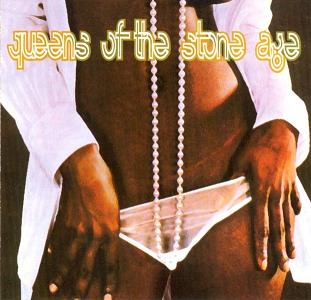

The Story
Released on September 22, 1998, Queens of the Stone Age introduced Josh Homme's new band with a debut that was leaner, more repetitive, and more controlled than the sprawling desert-rock jams associated with Kyuss. Recorded largely by Homme and drummer Alfredo Hernández, the album established the core of the band's early identity: tightly locked riffs, hypnotic repetition, dry vocals, and grooves that built tension through restraint rather than constant escalation.
Regular John, Avon, and If Only make that approach clear immediately. The songs are heavy, but they are also economical, driven by cyclical patterns and small tonal shifts instead of oversized arrangements. Walkin' on the Sidewalks and You Would Know widen the mood without abandoning that discipline, while How to Handle a Rope keeps the album centered on rhythm, repetition, and a sense of motion that feels mechanical without sounding lifeless.
Mexicola is one of the album's key tracks because it captures the balance between low-end swing and dry, concentrated force that would become central to the band's appeal. Hispanic Impressions acts as a short instrumental passage before You Can't Quit Me Baby stretches the atmosphere out further, showing how much tension Homme could generate with minimal harmonic movement. Give the Mule What He Wants then brings the record back toward a harder, more direct attack.
The original 1998 album closes with I Was a Teenage Hand Model, a track recorded separately at Rancho de la Luna with additional players from that scene. Its looser, stranger atmosphere gives the record an intentionally off-center ending and makes more sense as the closing statement of the original release than later reissue additions. That matters because the debut was not originally built around bonus tracks or expanded sequencing. In its first form, Queens of the Stone Age is a compact statement of method: groove, repetition, tension, and a new rock language stripped down to the essentials.