

The Story
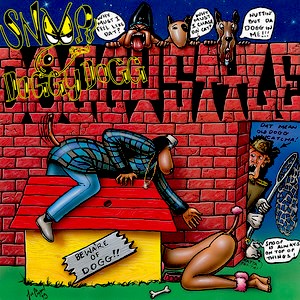
Released on November 23, 1993, Doggystyle turned Snoop Doggy Dogg's breakthrough appearance on The Chronic into a full-length debut that defined the next phase of G-funk. Produced by Dr. Dre, the album deepened the relaxed but sharply detailed West Coast sound that had already made Snoop a star: slow-rolling bass lines, high synth leads, live-feeling groove, and a vocal delivery that stayed conversational even when the lyrics turned aggressive, comic, or explicit. The original release also worked as a continuous sequence, with named interludes shaping the album's pacing rather than feeling like disposable extras.
Bathtub and G Funk Intro do more than set the scene. They establish the album's loose, party-room atmosphere before Gin and Juice arrives as one of its defining singles. W Balls and Domino Intro keep the flow moving into Tha Shiznit and Lodi Dodi, where Snoop and Dre show how minimal arrangement, timing, and tone could make familiar material feel newly precise. Murder Was the Case (DeathAfterVisualizingEternity) then shifts the mood darker, proving the album was not built on one emotional register alone.
The middle of the record is where Doggystyle becomes a full Death Row world rather than just a Snoop solo showcase. Serial Killa, Who Am I? (What's My Name?), For All My Niggaz & Bitches, and Ain't No Fun (If the Homies Can't Have None) turn the album into a collaborative map of the label's sound, while still keeping Snoop's voice at the center. Doggy Dogg World widens the palette with a smoother melodic feel, and the run through Gz and Hustlas, Checkin', Gz Up, Hoes Down, and Pump Pump gives the original release its proper closing stretch.
That original sequencing matters because later pressings condensed or omitted some of the interlude structure, and Gz Up, Hoes Down disappeared after the earliest version because of sample-clearance issues. In its original form, Doggystyle feels more like a continuous environment, not just a list of major singles and album cuts. That coherence is one reason the record became so influential: it was a star-making debut, but it was also a fully designed studio album that helped fix the sound, pacing, and attitude of West Coast rap in the public imagination.