
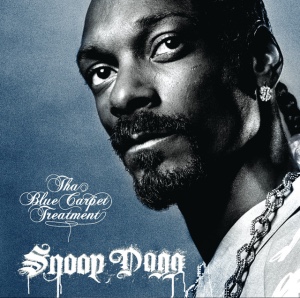
Snoop Dogg
Biography
Snoop Dogg is one of the rare rappers whose voice became larger than any single era. Born Calvin Cordozar Broadus Jr. in Long Beach, California, in 1971, he emerged in the early 1990s with a delivery so relaxed, musical, and instantly recognizable that it seemed to bend gangsta rap into a new shape. Before Snoop, West Coast rap could be hard, political, comic, or confrontational. After Snoop, it could also float. His drawl moved behind the beat, around the beat, and sometimes barely seemed to touch it, turning menace, humor, and charm into one continuous flow.
Snoop grew up in Long Beach, a city with its own identity inside the greater Los Angeles hip-hop world. He sang and played piano in church as a child, experiences that helped shape his natural sense of melody, even if his adult music would move far from the church environment. He earned the nickname Snoop from his mother because of his childhood resemblance to Snoopy from 'Peanuts'. As a teenager and young adult, he became involved in street life, and he also spent time making homemade tapes with friends. Those tapes became the unlikely doorway into one of the most important careers in hip-hop.
The early group that mattered most was 213, named after the Los Angeles area code then associated with the area. It included Snoop, his cousin Nate Dogg, and Warren G, Dr. Dre's younger stepbrother. Their recordings circulated informally, and Warren G brought Snoop's voice to Dre's attention. Dre had just left N.W.A and was beginning the next phase of his career, looking for a new sound and a new cast of voices. When he heard Snoop, he found something different from the aggressive shouting that dominated much of hard rap at the time. Snoop could sound dangerous without raising his voice. He could make a threat feel like a joke and a joke feel like a threat.
Snoop's first major appearance came on Dr. Dre's 1992 single 'Deep Cover', recorded for the film of the same name. The song introduced him to the wider rap audience with startling confidence. He did not sound like a newcomer trying to prove himself. He sounded as if he had already been living inside the beat for years. That impression deepened on Dre's 1992 album 'The Chronic', one of the defining records in hip-hop history. Although it was Dre's solo debut, Snoop was everywhere on it, not merely as a guest but as a co-star. His presence helped turn G-funk into a complete world: low-riding bass lines, Parliament-Funkadelic colors, clean drums, synth melodies, and a tone that was both sunlit and sinister.
On 'The Chronic', Snoop became the voice that made Dre's new production language feel effortless. Songs such as 'Nuthin' but a G Thang' and 'Dre Day' showed how naturally he could stretch syllables, slide between speech and melody, and make complex rhythmic placement sound casual. His style was not built around density in the East Coast sense. He was not trying to pack every bar with internal rhymes. His brilliance came from timing, tone, personality, and economy. A line could work because of how late he entered, how lightly he landed, or how much attitude he placed on one vowel.
The anticipation for Snoop's debut album became enormous. By the time 'Doggystyle' arrived in 1993 on Death Row Records, he was already famous, and the album entered the culture like an event. Produced by Dr. Dre, it debuted at number one on the Billboard 200 and became one of the most commercially successful rap debuts of its time. But its importance cannot be measured only in sales. 'Doggystyle' gave Snoop's personality a full landscape. The album was cinematic, funny, vulgar, smooth, and violent, often within the same stretch of music. It sounded like a Long Beach block party seen through a wide-angle lens.
'Doggystyle' worked because Dre and Snoop understood each other at a rare level. Dre's production was deep but uncluttered, leaving Snoop room to glide. The bass lines moved with funk authority, the keyboards gave the tracks a liquid sheen, and the drums hit with clean precision. Snoop's voice became the instrument that tied everything together. 'Gin and Juice' turned youthful chaos into a singable anthem. 'Who Am I? (What's My Name?)' built his public identity around call-and-response confidence. 'Murder Was the Case' showed a darker, more dramatic side, expanding the mythology around him with a near-cinematic sense of danger and consequence.
The album also captured the contradictions that would follow Snoop for decades. He was charming and alarming, playful and cruel, commercially irresistible and morally controversial. The language and imagery of 'Doggystyle' reflected gangsta rap's early 1990s extremes, including misogyny, street violence, and criminal fantasy. Snoop's voice could make the harshest material sound deceptively smooth, which was part of its power and part of why it drew criticism. He was never just a gangster character or a pop entertainer. He was both, and the tension between the two helped define his early fame.
That fame arrived while Snoop was facing a serious legal crisis. In 1993, he was charged in connection with a murder case involving the death of Philip Woldemariam. The case hung over the release of 'Doggystyle' and the first years of Snoop's stardom. In 1996, he was acquitted. The trial became part of the public story surrounding him, especially because 'Murder Was the Case' had already blurred the line between artistic persona and real-life danger in the public imagination. For Snoop, the acquittal marked a turning point, but it did not remove the instability surrounding Death Row Records.
Death Row in the mid-1990s was one of the most powerful and volatile labels in music. Snoop's second album, 'Tha Doggfather', arrived in 1996 after Dr. Dre had left the label and after Tupac Shakur had been killed. The atmosphere around the label had changed dramatically. Without Dre's full production presence, and with Death Row under heavy scrutiny, the album could not recreate the shock of 'Doggystyle'. It sold well, but it felt like a transitional record: Snoop was still a star, still charismatic, but the empire that had launched him was beginning to collapse around him.
Snoop eventually left Death Row and entered one of the strangest and most productive reinvention periods of his career. In 1998, he signed with Master P's No Limit Records, a move that surprised many listeners but made practical sense. No Limit was then a powerhouse independent rap label, and it offered Snoop a way out of Death Row's dangerous orbit. His No Limit debut, 'Da Game Is to Be Sold, Not to Be Told', repositioned him in the late 1990s Southern rap marketplace. The album was uneven compared with his best work, but it showed his survival instinct. Snoop had escaped being trapped as a symbol of one label's rise and fall.
The No Limit years gave Snoop space to keep recording, tour, and rebuild his business footing. Albums such as 'No Limit Top Dogg' and 'Tha Last Meal' were stronger than his first No Limit release and gradually reconnected him with West Coast production and older collaborators. 'Bitch Please', produced by Dr. Dre and featuring Xzibit and Nate Dogg, reminded listeners of the chemistry that had made Snoop's early work so potent. 'Tha Last Meal' in 2000 felt like the beginning of a second adult phase, one where Snoop was no longer just the young star of Death Row but a veteran learning how to remain visible in a changing rap world.
One reason Snoop lasted was that he understood his own persona better than almost anyone around him. He could be a gangsta rapper, a party host, a comic presence, a sports fan, a pimp-styled character, a family man on television, a reggae experimenter, a media personality, and later a corporate brand ambassador, all while keeping the same essential voice. That adaptability might have looked like contradiction, but for Snoop it became a strategy. He did not need to reinvent his voice. He needed to keep finding new rooms where that voice made sense.
In 2002, Snoop released 'Paid tha Cost to Be da Boss', an album that brought him into the early 2000s with renewed confidence. The Neptunes-produced single 'Beautiful', featuring Pharrell Williams and Charlie Wilson, was a major moment because it placed Snoop in a warmer, more melodic, more international pop frame without sanding away his identity. Pharrell's production gave him a lightness that Dre's darker G-funk had not emphasized in the same way. Snoop could sound luxurious, playful, and radio-friendly, and he could do it without seeming like he was chasing someone else's style.
That partnership reached its commercial peak with 'R&G (Rhythm & Gangsta): The Masterpiece' in 2004, especially the single 'Drop It Like It's Hot'. Produced by The Neptunes, the track was astonishingly minimal: tongue clicks, sparse percussion, empty space, and a beat that felt almost skeletal. Snoop did not overpower it. He leaned into the negative space, letting his calm delivery become the center of gravity. The song became one of his biggest hits and proved that more than a decade after 'Doggystyle', he could still sound modern. He was not merely surviving through nostalgia; he was adapting to the production language of a new era.
Snoop's creative process has often depended on chemistry with producers and collaborators. With Dre, he became the smoothest voice in G-funk. With The Neptunes, he became sharper, lighter, and more playful. With Nate Dogg and Warren G, he carried the familial warmth of the Long Beach sound. With younger artists, he often functioned as an elder statesman who could bless a track with instant recognizability. He was rarely the kind of artist who disappeared into a beat. The beat had to make room for Snoop Dogg, because his rhythm and tone were the brand.
The mid-2000s and 2010s showed Snoop turning into a full-spectrum entertainer. He released albums steadily, including 'Tha Blue Carpet Treatment', 'Ego Trippin'', 'Malice n Wonderland', and 'Doggumentary'. Some were stronger than others, but each reinforced his refusal to vanish. He hosted shows, appeared in films and television, commentated on sports and pop culture, coached youth football, developed business ventures, and became one of hip-hop's most familiar public faces. The dangerous young rapper of the early 1990s gradually became someone parents, sports fans, and television audiences recognized with affection, even if his older work remained rooted in a harsher world.
His public personality became a major part of the story. Snoop has a dry comic timing, a relaxed conversational style, and a gift for making almost any situation seem less formal. That quality helped him cross into mainstream entertainment in ways few gangsta rap figures could. His friendship and television chemistry with Martha Stewart became one of the more unexpected pop-culture pairings of the 2010s. The pairing worked because Snoop did not abandon his identity; he brought it into an absurdly different context and made the contrast feel natural.
Snoop's reggae period was one of his most debated reinventions. In 2012, after a trip to Jamaica and a stated spiritual shift, he adopted the name Snoop Lion and released 'Reincarnated' in 2013. The project moved away from rap toward reggae and Rastafarian imagery, and it was accompanied by a documentary. Some listeners saw it as sincere exploration, while others criticized it as superficial or awkward. Artistically, it was not the center of his legacy, but it showed his willingness to risk embarrassment in public. Snoop had always played with identity, and 'Reincarnated' made that habit unusually explicit.
He later explored gospel with 'Bible of Love' in 2018, another project that connected back to his childhood church background. Like the reggae experiment, it reminded listeners that Snoop's musical identity was broader than the narrowest version of gangsta rap. He could move into spiritual material, funk, pop, R&B, and classic West Coast rap because his voice served as the through-line. Even when the genre changed, the listener recognized the cadence, the humor, and the ease.
Snoop's relationship with Death Row came full circle in 2022, when he acquired the Death Row Records brand. The symbolism was powerful. The label that had launched him, endangered him, and defined his early mythology was now under his control. He released 'BODR', short for 'Bacc On Death Row', as a statement of ownership and return. This was not simply a business move. It was a rewriting of the old power structure. The young artist who had once needed to escape Death Row had become the adult figure trying to reshape its legacy.
In 2024, Snoop reunited with Dr. Dre for 'Missionary', presented as a sequel in spirit to 'Doggystyle'. The title itself played on that history, but the context was completely different. The first album had come from young men inside the violent glamour of Death Row's rise. 'Missionary' came from veterans with decades of fame, loss, criticism, success, and business experience behind them. The reunion mattered because Dre and Snoop remain one of rap's foundational producer-rapper pairings. Their chemistry helped define the 1990s, and any return to that partnership carried the weight of hip-hop memory.
Snoop also became a highly visible figure outside music in the 2020s. His work as a commentator and personality during major sports and entertainment events showed how far his public image had traveled. He could appear beside athletes, actors, chefs, corporate executives, and younger rappers without seeming out of place. That kind of ubiquity can sometimes soften how people remember an artist's musical importance, but in Snoop's case it also proves the unusual strength of his persona. Very few rappers from the early 1990s became household names across so many generations.
Musically, Snoop's greatest gift remains his flow. He made restraint sound charismatic. In a genre often associated with verbal force, he showed that calm could be just as commanding. He stretched words, clipped them short, used melody casually, and treated silence as part of the rhythm. His voice could make a hook feel effortless and a verse feel conversational even when the writing was carefully patterned. This is why so many producers have wanted him on records. Snoop does not simply add a verse; he changes the temperature of a track.
His influence is also linguistic and cultural. Snoop helped popularize playful slang, especially his use of izzle-style phrasing, and he made West Coast style globally recognizable: the drawl, the lowrider cool, the relaxed posture, the mix of humor and threat. He became one of the main faces of G-funk, but his influence stretched beyond that sound. Later rappers learned from his pacing, his branding, his melodic ease, and his ability to become a personality without leaving music behind.
The complications in Snoop's catalog should not be ignored. Some early lyrics reflect the misogyny and violence common in gangsta rap's commercial peak, and those elements have aged unevenly. His public persona has often been charming enough to make the harder edges seem lighter than they are. A serious view of Snoop has to hold both realities: the early records were musically innovative and culturally important, and they also carried attitudes that deserve criticism. Snoop's longevity partly comes from how he moved beyond being only that early persona, but the early persona remains part of the story.
His best albums define different stages of his life. 'Doggystyle' is the essential debut, the moment where youth, danger, humor, Dre's production, and Snoop's voice aligned perfectly. 'Tha Doggfather' captures the difficulty of following a classic while Death Row was falling apart. 'Tha Last Meal' and 'Paid tha Cost to Be da Boss' show his transition into veteran independence. 'R&G (Rhythm & Gangsta): The Masterpiece' proves his ability to fit a new radio era. Later projects such as 'BODR' and 'Missionary' are less about breakthrough than about ownership, memory, and the long arc of survival.
Snoop Dogg matters because he changed what rap stardom could sound like. He did not need to be the loudest voice in the room. He made ease into authority. He helped turn Long Beach and Death Row into central pieces of hip-hop history, gave Dr. Dre's G-funk era its most fluid human presence, survived label chaos and legal danger, adapted through multiple industry cycles, and became one of the most recognizable entertainers in the world. The smoothness was never accidental. It was the craft. Under the laid-back surface was timing, instinct, and an almost unmatched understanding of how to make personality travel through sound.
Today, Snoop is viewed not only as a rapper but as a cultural institution. That status can make him seem harmless compared with the shocking young figure who appeared beside Dr. Dre in the early 1990s, but the records explain why he became so large in the first place. The voice was new. The flow was unmistakable. The persona was flexible enough to move from street tapes to classic albums, from Death Row to No Limit, from Pharrell hits to television comedy, from reggae experiments to ownership of his old label. Snoop Dogg's legacy is the story of a rapper who turned cool into architecture and made one relaxed voice echo across more than three decades of popular culture.